






Plastic film is everywhere on a manufacturing site. It arrives wrapped around pallets. It’s used in production. It leaves again around finished goods. It’s lightweight, bulky and awkward. And if it’s not handled properly, it quickly ends up in general waste.
If you’re looking at soft plastic recycling manufacturing, you’re probably trying to solve a practical problem. You want a clear system that keeps film out of skips, reduces rejected loads and keeps you on the right side of UK rules, including England’s 2027 plastic film requirement.
This guide gives you exactly that. We’ll cover what counts as film, where it builds up, how to store it properly, how recycling works, and the compliance basics you need to know. The aim is simple. Make plastic film recycling for businesses easy and workable on your site.
What counts as plastic film and why soft plastics matters
On a manufacturing site, plastic film usually means thin, flexible plastics used for wrapping and protection.
Common examples include:
- Pallet stretch wrap
- Shrink film used to bundle products
- Polybag liners for bins or components
- Protective sheets and covers
- Bubble wrap and air pillows, often grouped as flexible plastics
Soft plastics is a plain English term. It means plastics you can scrunch in your hand. They’re flexible, not rigid like crates or trays.
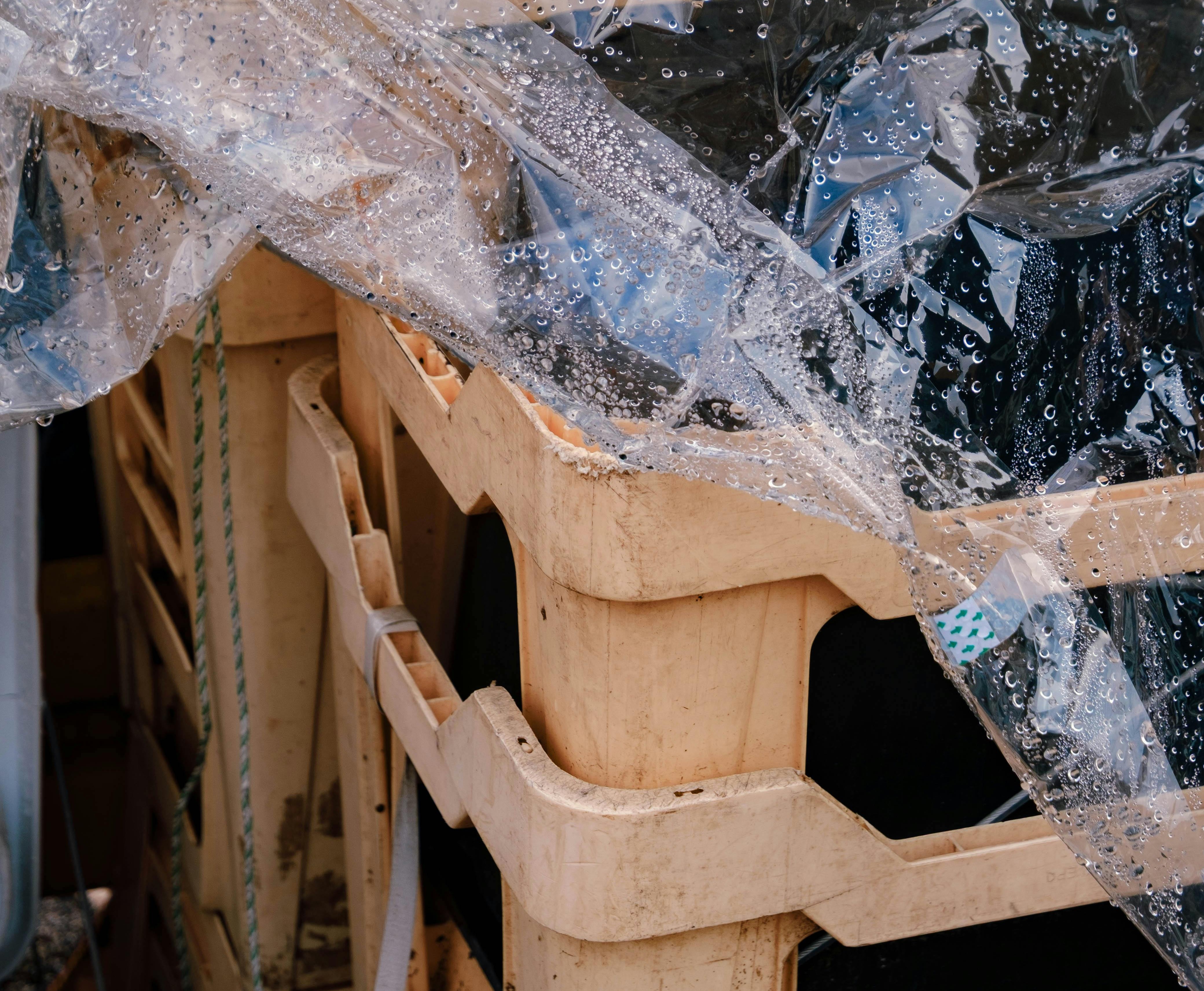
Most stretch film recycling and shrink wrap recycling for businesses involves polyethylene. That includes LDPE and LLDPE. These mono material films are easier to recycle when they’re clean. LLDPE recycling is common for stretch film because it’s strong and tear resistant.
Multi-layer laminates are different. These combine different polymers or add foil layers. They’re much harder to recycle mechanically. Heavy contamination also causes problems.
Quick ID guide
Typically recyclable when clean:
- Clear pallet wrap made from LDPE or LLDPE
- Clear shrink film from goods in or goods out
- Clean poly liners
Often not recyclable mechanically:
- Multi layer or foil lined films
- Heavily printed laminates
- Film heavily contaminated with food, oil or adhesives
Acceptance always depends on your collector and the specification agreed.
Where plastic film waste builds up on a manufacturing site
Plastic film waste in manufacturing usually builds up in three hotspots.
1. Goods in
Deliveries often arrive wrapped in stretch film. Pallets of raw materials, components and packaging are unwrapped in the warehouse. Without a nearby film-only bin, wrap drifts into general waste.
2. Production
Film appears during packaging steps, as liners in bins, or as off cuts from rolls. In food and drink or FMCG sites, protective films and covers are common. Automotive and construction products sites also generate large volumes of stretch film recycling material during batching and palletising.
3. Goods out
Finished goods are wrapped for dispatch. Pallet wrap recycling opportunities are often highest here. Dispatch bags and protective film add to the stream.
Why does it go wrong? The film is light and awkward. If bins are too far away, or not clearly labelled, it ends up in the nearest skip. That’s where manufacturing waste segregation for plastics needs to be thought through properly.
The biggest reason film recycling fails: contamination
The main reason plastic film recycling for businesses fails is contamination.
Common contaminants include:
- Tape and sticky labels
- Adhesives
- Product residue
- Oils and dirt from floors
- Metal ties or staples
- Cardboard or rigid plastics mixed into the film
When contamination levels are high, loads can be rejected or downgraded. That wipes out the benefit of recycling and can push material back into general waste.
If you’re wondering how to reduce contamination in plastic film recycling, start with simple controls.
Practical contamination reduction checklist
- Put film only collection points where film is removed
- Train staff to remove tape and labels where practical
- Keep film dry, covered and off the floor
- Keep cardboard, wood and rigid plastics out of the film stream
- On food sites, remove heavy residue quickly to prevent odour and mould
You don’t need perfection. You need a consistent, clean stream that meets your collector’s specification.
Your legal responsibilities in the UK
Film might feel like low-risk waste. Legally, it isn’t. The rules are straightforward if you understand the basics.
Duty of care basics
Under the Environmental Protection Act 1990, you have a duty of care for your waste. That means you must:
- Store waste securely
- Prevent it from escaping or causing harm
- Use authorised waste carriers and facilities
- Describe the waste accurately
- Complete a Waste Transfer Note for each non hazardous movement
- Keep records for at least two years
A Waste Transfer Note (WTN) is a document that records what waste is being moved, who’s moving it and where it’s going.
Good descriptions matter. For example:
- Clean LDPE film bales
- Mixed contaminated plastic wrap
This supports your waste duty of care waste transfer note obligations and protects you if issues arise.
Simpler Recycling in England
In England, Simpler Recycling requires businesses with 10 or more employees to collect core recyclables separately from 2025. Plastic film must be collected separately by 31 March 2027.
If you operate across the UK, remember that rules differ in Scotland, Wales and Northern Ireland. Multi site operators need location specific advice.
Planning now for stretch film recycling and film segregation avoids a last minute rush.
Packaging obligations
If you place packaging on the UK market, you may also have producer obligations.
Packaging EPR applies above certain turnover and tonnage thresholds. Plastic Packaging Tax applies if you manufacture or import 10 tonnes or more per year of finished plastic packaging with less than 30% recycled content.
These rules depend on your role in the supply chain. Speak to the right internal owner, often finance or compliance, to confirm where you sit.
How to set up plastic film recycling on site
Here’s a practical playbook you can follow.
Step 1: Segregate film at the point of removal
The most effective system is simple.
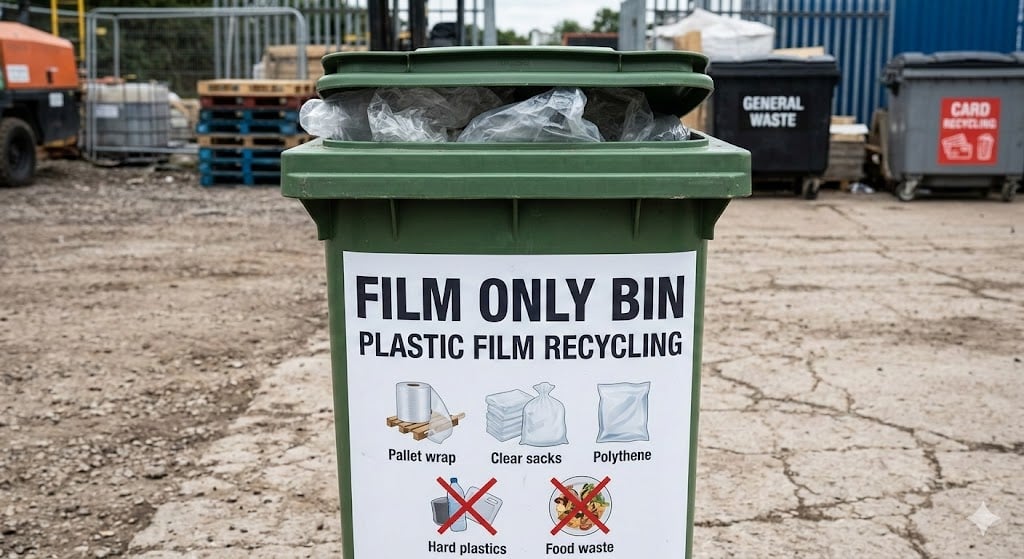
- Install film only bins or cages where wrap is removed
- Use clear labels and simple signage
- Use clear sacks where possible so contamination is visible
- Keep film separate from cardboard, wood and rigid plastics
This supports manufacturing waste segregation plastics at source. It reduces cross-contamination and makes collections easier.
If you need support with collections for flexible plastics, options are available within our broader business waste and recycling services.
Step 2: Store it clean, dry and safe
Wet film is heavier and harder to process. Store film indoors or under cover where possible.
Keep good housekeeping standards:
- Remove loose film from walkways to prevent slips and trips
- Store away from ignition sources as film is flammable
- Keep access and escape routes clear
This protects staff and supports clean LLDPE recycling streams.
Step 3: Decide whether you need a baler or compactor
Film is bulky. Plastic baling for film can reduce volume significantly and improve collection efficiency.
A simple guide:
- High volumes and limited space usually mean a baler makes sense
- Low or variable volumes may be managed with cages and scheduled collections
Baled film is easier to handle and often meets recycler specifications more consistently.
Step 4: Train staff and keep it consistent
Assign responsibility by shift. Keep instructions short and visible.
- Use simple signage
- Provide quick refresher briefings
- Track rejected loads and fix root causes
A feedback loop helps you improve over time. Cleaner film means fewer issues and smoother plastic film recycling for businesses.
What happens to your film after collection
Clean LDPE and LLDPE film usually goes through mechanical recycling.
The basic process is:
- Shredding
- Washing to remove contaminants
- Pelletising into recycled plastic resin
That resin can be used to make bin liners, construction membranes and in some cases new stretch film for non-food uses. Recycled PP film can be used in automotive parts, horticulture products and building materials.
If film is contaminated or made from composite laminates, it often goes to energy from waste. That recovers energy but not the material. Chemical recycling is emerging in the UK but capacity remains limited.
You can explore services for flexible plastics as part of a compliant setup.
The business case: why film recycling is worth sorting out
Disposal costs are rising. The UK standard rate of landfill tax increases to £126.15 per tonne from April 2025, before gate fees, according to the research summary. Total disposal costs vary by site and contract.
Clean, baled LDPE film can have value. Contaminated film value drops sharply. That’s why segregation and plastic baling for film matter commercially.
From a sustainability perspective, recycling plastic can save around 1.2 tonnes of CO₂ per tonne of plastic, using PP as an illustrative benchmark . While exact savings depend on material and process, recycled polymer avoids the emissions linked to virgin production.
For manufacturing businesses with net zero targets, reducing general waste and increasing stretch film recycling supports Scope 3 waste reporting in a practical way.
There are also wider environmental benefits. Diverting film from landfill supports the waste hierarchy and helps to avoid the negative impacts of landfill.
Common problems and how to fix them quickly
“We don’t have space”
Consider plastic baling for film to reduce volume. Move collection points closer to where film is removed. Increase pickup frequency if needed.
“Our film bales get rejected”
Revisit the contamination checklist. Agree clear specifications with your collector. Audit the stream for tape, labels and mixed materials.
“Volumes swing month to month”
Use flexible collection schedules. Consider temporary storage cages. Avoid over-investing in equipment if volumes are low and variable.
Staff don’t follow the system
Simplify signage. Assign ownership by shift. Share visible wins such as fewer general waste skips and tidier areas.
We’re unsure what’s legally required
Separate must do from best practice. Must do includes duty of care, authorised carriers, Waste Transfer Notes and planning for England’s 2027 requirement. A specialist partner can help you navigate plastic film recycling for businesses confidently.
Future proofing: how to get ready for 2027 and beyond
In England, plastic film must be collected separately by 31 March 2027 under Simpler Recycling.
You can prepare now by:
- Mapping where film arises on site
- Trialling segregation at goods in and goods out
- Introducing baling if volumes justify it
- Improving data tracking for waste movements
- Reviewing contracts and material specifications
Automation and improved sorting technology are developing. Some high-volume sites are exploring on-site recycling equipment. Digital waste tracking is also becoming more common, supporting better compliance and reporting. You can read more about digital waste tracking as part of a future ready approach.
Taking steps now makes 2027 feel manageable rather than disruptive.
Making plastic film recycling simple
The simplest path is clear.
- Identify your film streams
- Keep them clean and dry
- Segregate at source
- Consider baling if volumes demand it
- Keep your paperwork straight
- Plan ahead for England’s 2027 requirement
When you do that, you’ll see fewer rejected loads, less wasted space and clearer compliance. Reporting becomes easier. Sustainability targets feel more achievable.
A specialist waste partner can help you design the right collection setup and keep everything aligned with UK rules, without adding complexity to your operation.
Talk to First Mile about setting up a simple, compliant plastic film recycling system for your manufacturing site.
FAQs on handling plastic film in manufacturing sites
What counts as plastic film or soft plastic on a manufacturing site?
Plastic film includes stretch wrap, shrink film, polybag liners and protective sheets. Soft plastics is a broad term for flexible plastics you can scrunch. Most are made from LDPE or LLDPE.
Can pallet wrap be recycled?
Yes, pallet wrap recycling is often possible if the material is clean LDPE or LLDPE. Acceptance depends on contamination levels and your collector’s specification.
What’s the best way to store plastic film for recycling?
Keep it clean, dry and covered. Use dedicated film-only bins or bales. Avoid loose film on floors to reduce slip risks and contamination.
Do I need a baler for plastic film?
It depends on your volume and space. High-volume sites usually benefit from plastic baling for film. Lower-volume sites may manage with cages and scheduled collections.
What contamination stops film being recycled?
Tape, labels, adhesives, food residue, oils, metal ties and mixing with cardboard or rigid plastics can all lead to rejection or downgrading.
What paperwork do I need for plastic film collections?
You need a Waste Transfer Note for each collection of non-hazardous film waste. Keep records for at least two years to meet your duty of care obligations.
When do England’s rules require plastic film recycling at work?
Under Simpler Recycling, businesses in England with 10 or more employees must collect plastic film separately by 31 March 2027. Rules differ in Scotland, Wales and Northern Ireland.
What happens to recycled plastic film?
Clean film is usually mechanically recycled. It’s shredded, washed and pelletised into recycled resin. That resin can be used in products such as bin liners, construction membranes and some new film applications.