





If you’re responsible for waste at work, you’ve probably heard people talking about “2026 food waste rules” and wondered what that actually means for you. Do you need to change how things work on site? Is there something new coming? Or are you already expected to be doing this?
Food waste separation is not a future problem. For most businesses, it’s already a requirement or about to become one. 2026 is simply the point where all UK nations are fully aligned and enforcing business food waste separation in day-to-day operations.
With the right bins, collections and a bit of staff awareness, compliance is very achievable. This guide explains what the standards are, how they differ across the UK, and what good food waste separation looks like in real workplaces, from offices to cafés and everything in between.
What are the 2026 food waste separation standards?
At its core, the standard is simple. If your business produces food waste, you need to separate it from your general waste and have it collected for recycling. By 2026, this applies across the whole UK.
These rules are part of wider food waste regulations designed to cut landfill and make recycling more consistent. Food waste is no longer treated as something to throw away and forget about.
Once separated, food waste must go to the right place. That usually means anaerobic digestion, a recycling process that turns food waste into renewable energy and fertiliser, or industrial composting. Sending food waste to landfill is no longer acceptable anywhere in the UK.
UK business food waste rules by nation
The overall principle is the same wherever you operate. Food waste has to be separated and recycled. What differs slightly is how much food waste triggers that requirement and who is exempt.
England
In England, food waste separation forms part of the Simpler Recycling reforms.
- The rules apply from 31 March 2025
- All businesses that produce food waste must separate it, no matter how small the amount
- Microbusinesses with fewer than 10 employees have a temporary exemption until 31 March 2027
These requirements apply across offices, hospitality, retail, healthcare, education and public sector sites. There is no weight threshold in England once the exemption period ends.
Scotland
Scotland has had food waste separation rules in place for many years.
- Food businesses producing more than 5kg of food waste per week must separate it
- Some rural premises are exempt where collections are not practical
- A ban on biodegradable waste going to landfill reinforces strong enforcement
Because the system is well established, expectations around compliance are high.
Wales
Wales introduced new workplace recycling regulations in April 2024.
- Food waste must be separated if more than 5kg per week is produced
- The rules also cover additional materials such as textiles and small WEEE, which means Waste Electrical and Electronic Equipment
Food waste is only one part of a wider recycling framework, but the separation requirement is clear.
Northern Ireland
Northern Ireland has long required food waste separation under duty of care rules.
- Food businesses producing 5kg or more per week must separate food waste
- International catering waste is exempt for biosecurity reasons
- Enforcement is well established through environmental regulators
What counts as business food waste?
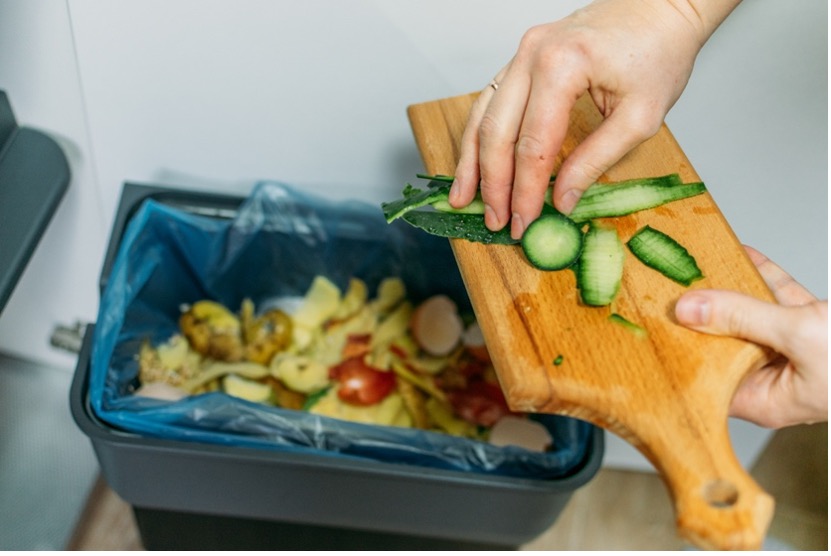
Business food waste is any food or organic material intended for people that is thrown away on site.
That includes:
- Food preparation waste like peelings and trimmings
- Plate scrapings
- Tea bags and coffee grounds
- Meat, fish and bones
- Dairy products and bread
- Eggshells
In England, small amounts still count once the microbusiness exemption ends. There is no minimum volume.
What shouldn’t go in food waste bins:
- Non compostable packaging
- Plastic wrappers or disposable cutlery
- Large volumes of liquid such as soups or sauces
Keeping food waste clean is important. Contamination can lead to collections being rejected and can cause compliance problems.
Operational standards businesses must have in place
Food waste separation works best when it fits naturally into how your workplace already runs. These are the practical standards businesses need.
Bins, liners and placement
You will need:
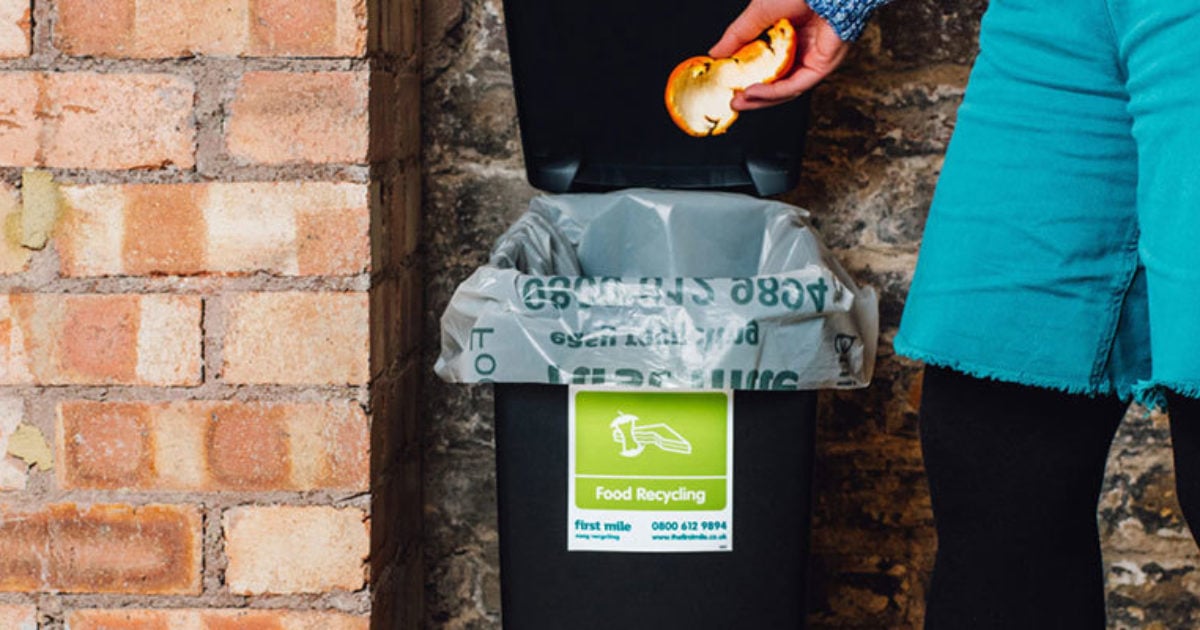
- Dedicated internal food waste caddies
- External food waste bins designed for secure storage
- Compostable liners that meet EN 13432, the recognised standard for industrial composting
Bins should be clearly labelled so there’s no confusion. Simple signs like “Food waste only” work well.
Placement matters more than people realise. Put food waste bins where waste is created. Kitchens, prep areas, staff break rooms and wash up areas are all key spots. When the right bin is close by, people use it.
Collections and storage
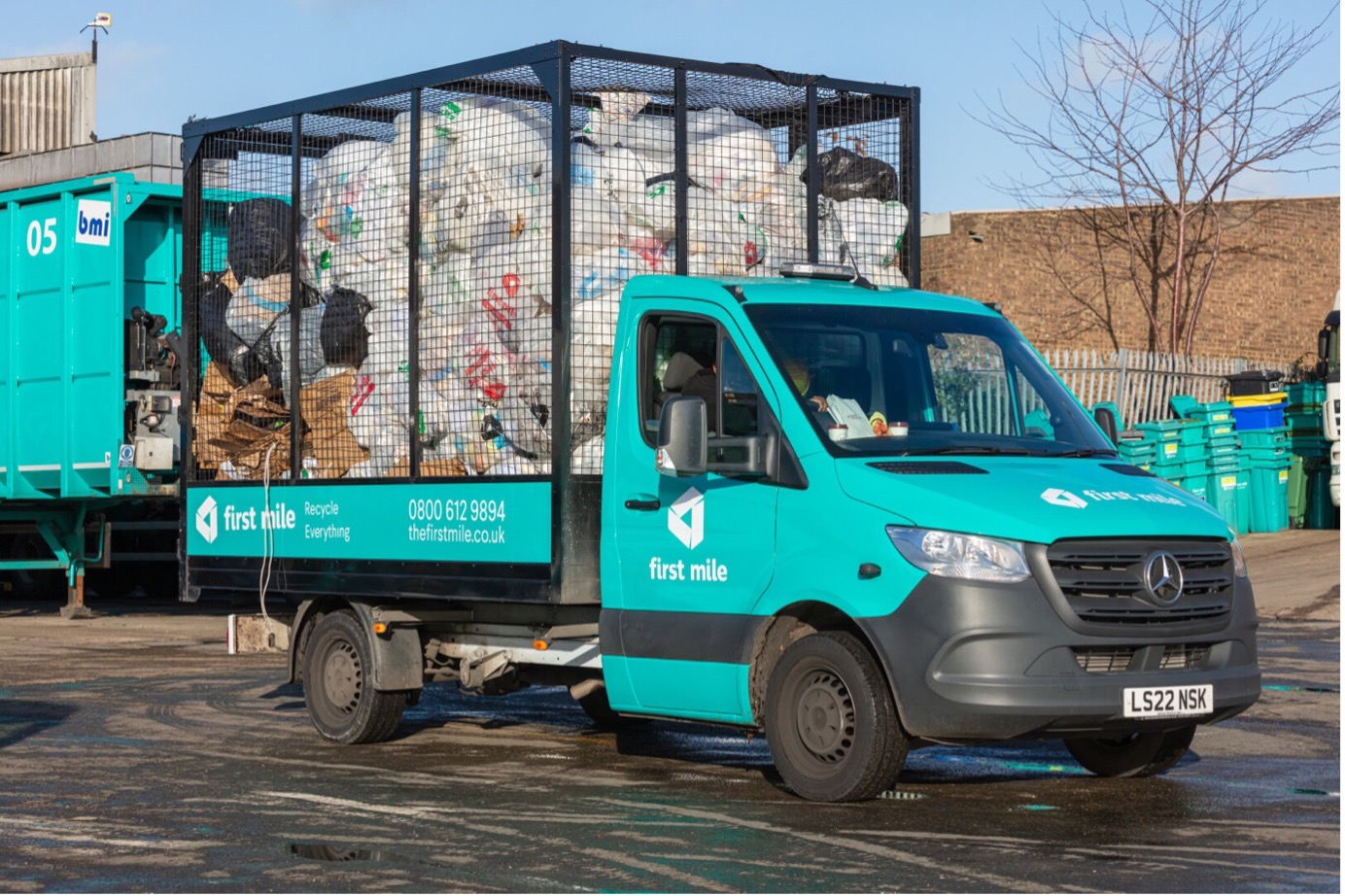
Businesses need to arrange business food waste collection with a licensed waste carrier like First Mile.
Good practice includes:
- Collection frequency that matches how much waste you produce, with weekly collection suitable for most sites
- Secure storage with lids kept closed to prevent pests and smells
- A written contract and waste transfer notes, which are documents that show your waste is handled legally. These records form part of your legal duty of care.
Staff training and internal controls
Even the best setup needs people to use it correctly.
Simple steps make a big difference:
- Clear guidance on what goes in each bin
- Posters or bin signage as visual reminders
- Recycling champions who keep an eye on standards
- Regular checks to catch contamination early
When staff understand that separating food waste is both a legal requirement and a positive environmental step, it quickly becomes routine.
What Businesses must not do
There are a few common mistakes that regularly cause problems.
Businesses must not:
- Mix food waste back into general waste
- Dispose of food waste through sinks, macerators or digesters connected to sewers
- Send separately collected food waste to landfill
Disposal of food waste to the sewer is banned across the UK. Even if older equipment is still installed, food waste must be collected in bins and sent for recycling.
Enforcement, inspections and why compliance matters
Enforcement is handled by local authorities and environmental regulators, depending on where you operate.
If standards are not met, outcomes can include:
- Rejected or suspended waste collections
- Enforcement notices
- Fines and enforcement action
There is also a financial impact. Poor separation usually means higher disposal costs and greater exposure to landfill tax. For customer facing businesses, reputational risk is another real concern.
In practice, it’s far easier and cheaper to get things right upfront than to fix problems after an inspection.
How First Mile helps businesses meet food waste standards
First Mile helps businesses manage food waste disposal for businesses in a way that’s compliant, practical and genuinely greener.
We provide:
- Dedicated food waste collections sent to anaerobic digestion
- Flexible collection schedules to suit offices, hospitality, education and multi site businesses
- Bins, EN 13432 compostable liners, clear signage and on site audits
- RecycleID™, which uses QR codes to track waste, and our Recycling Data Studio, an online dashboard that gives you clear data and proof of compliance
Most importantly, we work as a partner. We help you stay compliant now and adapt as rules evolve.
Food waste separation, made manageable
Food waste separation is now part of everyday business operations across the UK. By 2026, the standards will be clear and consistent throughout the UK, and very achievable with the right setup.
Acting early helps you stay ahead of inspections, control costs and reduce disruption. It also turns food waste into something positive, creating energy instead of landfill.
Talk to First Mile about setting up compliant food waste collections for your business, and let us help you make compliance simple and sustainable.
FAQs
Do all businesses need a food waste bin?
In England, most businesses do unless they qualify for the temporary microbusiness exemption. In Scotland, Wales and Northern Ireland, a food waste bin is required once you exceed the 5kg per week threshold.
What if we only produce a small amount of food waste?
In England, any amount counts once exemptions end. In the rest of the UK, businesses producing under 5kg per week may be exempt, although separating food waste is still considered best practice.
Are food waste macerators allowed in the UK?
No. Food waste disposal to sewer is banned across the UK by 2025 to 2026, including macerators and digesters connected to drains.
How often should food waste be collected?
Collection frequency should match how much waste you produce. Weekly collection works for most businesses, while higher volume sites may need more frequent collections to stay hygienic and compliant.