






If your business produces food waste, you’re responsible for handling it properly. That includes storing it safely before it’s collected.
Food waste shows up in more places than you might expect. It could be leftovers from a staff kitchen, waste from a café or canteen, or preparation waste from a restaurant or catering business.
Even offices producing tea bags, coffee grounds and lunch leftovers still need to manage food waste correctly.
Across the UK, rules around workplace recycling and food waste compliance are becoming clearer and more consistent. Many businesses are now expected to separate food waste and arrange proper collection.
If food waste isn’t stored properly, it can quickly start to cause problems. Poor storage can create hygiene risks, attract pests and lead to unpleasant smells. It can also put you on the wrong side of waste regulations.
This guide breaks down food waste storage requirements in simple terms, covering the key legal expectations, practical storage rules, how regulations differ across the UK and how First Mile can help make food waste compliance easier.
What are the food waste storage requirements for businesses in the UK?
Businesses must store food waste safely and hygienically until it’s collected. These requirements come from both food hygiene regulations and waste legislation, including your waste duty of care.
In practice, this means your workplace should:
- Store food waste in suitable containers
- Prevent leaks, spills and contamination
- Avoid odours and pest attraction
- Keep waste away from food preparation areas
- Ensure waste is transferred to a licensed waste carrier
Food waste should never be allowed to build up in kitchens or staff areas. It needs to be removed regularly and stored in containers designed for the type of waste you produce.
Your responsibility doesn’t end when the waste leaves your site. Under waste duty of care rules, businesses must also ensure their waste is handled responsibly from the moment it’s produced until it’s collected and processed.
In most workplaces, food waste compliance comes down to three simple steps:
- Storing waste safely in appropriate containers
- Separating food waste from other waste streams
- Arranging collection through an authorised waste carrier
For many organisations, the practical challenge isn’t understanding the law but putting a practical system in place that works day to day. If you want a broader view of your responsibilities, it’s worth reviewing the business recycling laws that apply to your organisation.
Do businesses have to keep food waste separate from general waste?
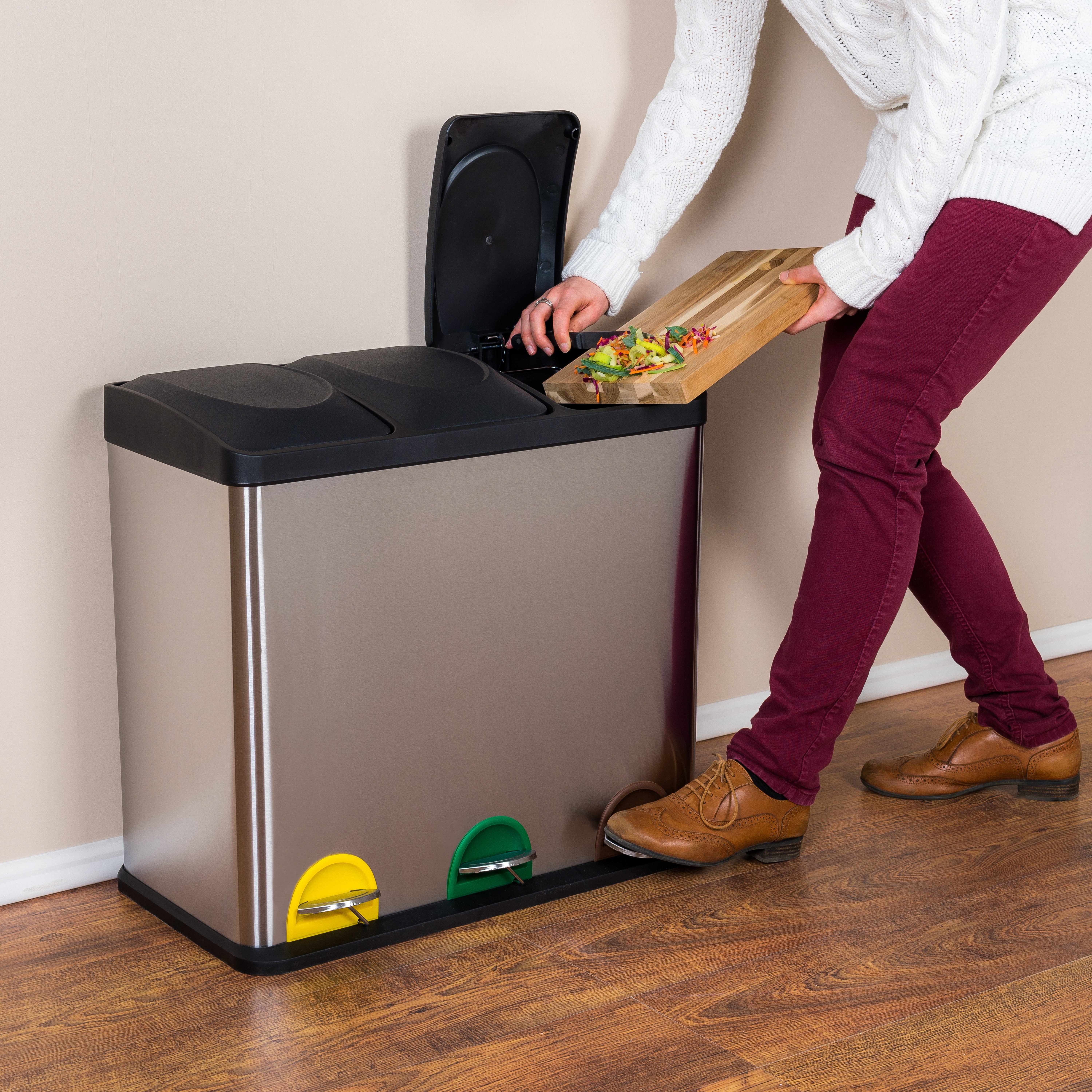
In many cases, yes. The requirement for businesses to keep food waste separate from general waste is becoming the standard.
Separating food waste helps support recycling and prevents contamination of other materials. When it’s collected separately, food waste can be recycled through processes like anaerobic digestion, where organic waste is broken down to produce renewable energy and fertiliser.
Across the UK, workplace recycling rules are moving towards clearer separation requirements. That means many businesses now need separate food waste bins and a dedicated collection service.
Here are a few frequently seen examples of the food waste that’s generated in workplaces:
- Leftover food from staff lunches
- Fruit peel and vegetable scraps
- Tea bags and coffee grounds
- Expired food from retail or hospitality sites
- Food preparation waste from kitchens or canteens
The specific requirements vary across England, Wales, Scotland and Northern Ireland, but the overall direction is the same. Food waste segregation is becoming a normal part of commercial waste management.
What’s changed under Simpler Recycling in England?
Under Simpler Recycling, many workplaces are now required to separate key recyclable materials, including food waste.
This applies to a wide range of organisations, not just hospitality. Offices, schools, healthcare sites and retail businesses may all need to separate food waste and arrange collection through a licensed waste carrier.
For most businesses, this is part of a wider shift towards more consistent commercial food waste regulations and clearer recycling systems.
If you want a deeper dive, you can explore First Mile’s guide to navigating the Simpler Recycling reforms.
What type of bin or container should food waste be stored in?
Food waste containers should keep waste contained, hygienic and easy to manage.
Most workplaces use a simple two-step setup.
First, smaller containers inside kitchens or food preparation areas. These are often called food caddies.
Second, larger external bins where the waste is stored until it’s collected.
Suitable containers should be:
- Lidded to prevent odours and pests
- Durable and washable allowing regular cleaning
- Leak-proof to prevent spills or liquids escaping
- Clearly labelled to help staff separate waste correctly
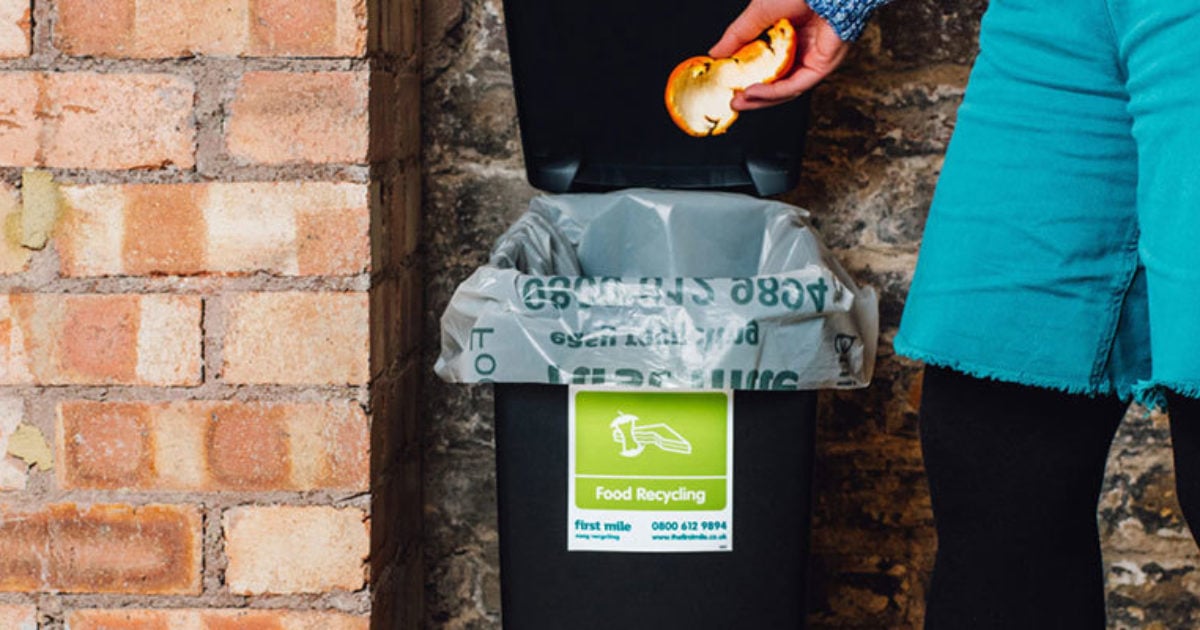
In a typical workplace setup, staff scrape food scraps into an internal caddy during the day. At regular intervals, the caddy is emptied into a larger external food waste bin located in a designated waste storage area.
Keeping containers clean is just as important as choosing the right ones. Regular washing helps prevent bacteria, reduce odours and maintain hygiene standards.
Good container design and regular maintenance are key parts of food waste storage requirements.
How should food waste be stored on business premises?
How you manage food waste on site is just as important as the containers used to store it.
Businesses should make sure that their waste storage areas are organised, secure and hygienic.
Good practice includes:
- Keeping food waste bins away from food preparation surfaces
- Removing waste regularly from kitchens or food handling areas
- Storing external bins in secure waste storage areas
- Ensuring bins are closed when not in use
- Preventing bins from overflowing
- Managing waste to avoid odours and pest attraction
The right routine depends on your workplace.
For example, a hospitality venue may remove food waste from the kitchen several times a day during busy service periods. An office environment may empty kitchen caddies at the end of each working day.
Regular removal and good housekeeping help ensure food waste never builds up in areas where food is prepared or handled.
Environmental health officers review waste storage areas as part of routine hygiene inspections. Clear processes make compliance easier and help you stay inspection-ready.
Food waste regulations across the UK
The core principles of food waste compliance are similar across the UK, but there are some regional differences.
England food waste rules for businesses
England is introducing the Simpler Recycling framework to standardise workplace recycling requirements.
Under this framework, businesses are expected to separate key recyclable materials such as paper, cardboard, plastic, glass, metal and food waste where relevant.
The aim is to make recycling more consistent across workplaces and improve national recycling rates.
For businesses that produce food waste, this means arranging separate food waste collection rather than disposing of it with general waste.
Wales food waste rules
Wales has some of the most established workplace recycling rules in the UK.
Businesses are required to separate recyclable materials, including food waste and ensure they’re collected for recycling.
Importantly, disposing of food waste through sewer systems or drains is prohibited in Wales.
This means businesses must have proper systems in place to store food waste safely and arrange appropriate collection.
Scotland food waste rules
In Scotland, businesses that produce more than 5kg of food waste per week must arrange separate collection.
This rule applies to many types of organisations, including hospitality venues, food retailers and workplaces with staff kitchens or canteens.
Separating food waste ensures organic material can be processed through recycling systems like anaerobic digestion, where it can be converted into renewable energy and fertiliser.
Northern Ireland food waste rules
Northern Ireland introduced Food Waste Regulations in 2015.
Under these regulations, businesses that produce significant amounts of food waste must separate it for collection rather than mixing it with general waste.
The aim is to improve recycling rates and reduce the environmental impact of organic waste.
Who is responsible for food waste compliance in a business?
Responsibility for food waste compliance usually sits with the business that produces the waste.
In many organisations, this means responsibility falls to:
- Facilities managers
- Operations managers
- Site managers
- Hospitality or catering leads
In shared buildings, responsibilities can feel less clear. Landlords may provide waste services, but your business still has a duty of care for the waste you produce.
This means your organisation must ensure waste is stored correctly, separated where required and collected by a licensed waste carrier.
Even when a landlord manages waste services, businesses should confirm that compliant systems are in place.
Can businesses put food waste down the drain or use macerators?
In most cases, no, or at least it’s not recommended.
Food waste entering drains can cause problems in wastewater systems. Organic waste contributes to blockages and can combine with fats, oils and grease to create large deposits known as fatbergs.
Because of this, some jurisdictions restrict or discourage the use of food waste macerators.
Instead, businesses are generally expected to collect food waste separately and arrange for it to be recycled.
When food waste is collected properly, it can be processed through anaerobic digestion, producing renewable energy and agricultural fertiliser.
How a sustainable waste partner makes food waste compliance easier
Managing food waste compliance internally can be challenging, particularly for organisations with multiple sites or complex operations.
Working with a reliable waste partner like First Mile can make the process much easier.
A commercial waste provider can help by:
- Supplying appropriate food waste bins and internal caddies
- Arranging regular food waste collection
- Ensuring waste is handled by a licensed waste carrier
- Supporting businesses with recycling requirements
- Helping multi-site organisations maintain consistent systems
- Providing documentation that supports waste duty of care
Working with the right partner removes a lot of the administrative and operational burden.
First Mile supports businesses with straightforward food waste collection services, clear reporting and practical support.
Keeping your business compliant
Food waste compliance is becoming a standard part of running a responsible business.
In simple terms:
- Store food waste safely
- Separate it where required
- Arrange collection through a licensed provider
Rules vary slightly across the UK, but the overall expectation is clear.
With the right bins, clear processes and reliable collection services in place, businesses can manage food waste responsibly while avoiding unnecessary risks.
If you want to make things simple, First Mile can help you manage food waste with simple, reliable collection services that fit your business.
FAQs on food waste storage requirements
Explain UK food waste storage requirements for businesses in plain English
Businesses must store food waste safely and hygienically. This usually means using lidded containers or food caddies that prevent leaks, smells and pests.
Food waste should not build up in food preparation areas and should be removed regularly.
Businesses must also make sure their waste is collected by a licensed waste carrier as part of their legal waste duty of care.
What bins and storage setup does a business need for food waste compliance?
Most workplaces use a two-stage system.
Small internal caddies collect food scraps in kitchens or preparation areas. These are then emptied into larger external food waste bins stored in a designated waste area.
Containers should be lidded, leak-proof, durable and easy to clean to maintain hygiene and prevent contamination.
Do offices and non-hospitality workplaces need separate food waste bins in the UK?
In many cases, yes.
Workplace recycling rules increasingly require organisations to separate recyclable waste streams, including food waste.
This applies beyond hospitality. Offices, schools and healthcare facilities often generate food waste through staff kitchens or catering services and may need separate food waste collection.
Compare England, Wales, Scotland and Northern Ireland food waste rules for businesses
Food waste legislation is broadly similar across the UK, but there are some differences between nations.
England is introducing simpler Recycling rules, these require workplaces to separate recyclable materials including food waste.
Wales has strict recycling separation rules and prohibits the disposal of food waste through drains.
Scotland requires businesses producing over 5kg of food waste per week to arrange separate collections.
Northern Ireland also requires separation under its Food Waste Regulations.
What records are needed when arranging commercial food waste collection?
Businesses must keep waste transfer notes when waste is collected.
These documents record what waste was collected, who collected it and where it will be processed.
Keeping these records helps businesses demonstrate compliance with their legal waste duty of care obligations.