






If you manage an office, you’ve probably asked yourself a simple question: are we getting office recycling right?
With new Simpler Recycling rules now in place, many businesses are unsure what’s actually changed. Do you need more bins? What should go where? And how do you make workplace recycling easy for your team to follow?
Luckily, Simpler Recycling is designed to remove confusion, not create it.
It sets clear workplace recycling rules across England, so businesses handle waste in a consistent way. For most offices, that means making a few practical adjustments rather than starting from scratch.
In this office recycling guide, you’ll find out what’s required and how to build a simple, effective system that works day to day.
What is Simpler Recycling for offices?
Simpler Recycling for offices is a set of rules that standardises how businesses separate waste.
Instead of guessing what goes where, you follow a clear structure. This supports better business recycling and makes it easier to manage waste across different sites.
Offices must separate three main waste streams:
- Dry mixed recycling such as paper, cardboard, plastic packaging, metal cans and glass bottles
- Food waste from kitchens and break areas
- Residual waste, which is non-recyclable material
This approach improves recycling rates and reduces contamination, which is one of the biggest barriers to effective commercial recycling.
If you already have office recycling bins in place, you’re likely part of the way there. The focus now is on making sure materials are clearly separated and collected correctly.
When do the simpler recycling rules apply to offices?
The Simpler Recycling rules apply to workplaces across England.
Most businesses were required to comply by 31 March 2025. This includes offices, retail spaces, hospitality venues and other commercial workplaces that produce waste.
If your workplace produces waste, you should already have the required recycling streams in place.
Micro-firms have more time to prepare. Businesses with fewer than 10 employees must comply by 31 March 2027.
These rules apply to any workplace that produces waste, including:
- Traditional offices
- Shared offices
- Coworking spaces
- Serviced office buildings
If you already have a workplace recycling system, you may only need to refine it. If not, this is a good time to review your setup and make sure it aligns with current business recycling laws.
What waste must offices separate?
A good office waste management system starts with understanding your core waste streams.
Dry mixed recycling
Dry mixed recycling includes many common office materials that can be collected together.
Here are a few examples:
- Paper from printers and notebooks
- Cardboard packaging from deliveries
- Plastic bottles and packaging
- Aluminium drink cans
- Glass bottles and jars
These materials can usually be collected together using a mixed recycling service, as long as they are kept clean and dry.
If your office generates a lot of paper or packaging, you might also benefit from dedicated paper recycling or cardboard recycling streams.
Keeping these materials separate from general waste helps prevent recycling contamination in offices and improves overall recycling performance.
Food waste
Food waste is now a key part of workplace recycling.
In offices, food waste often comes from:
- Staff kitchens
- Break rooms
- Shared fridges
- Small cafeterias or catering areas
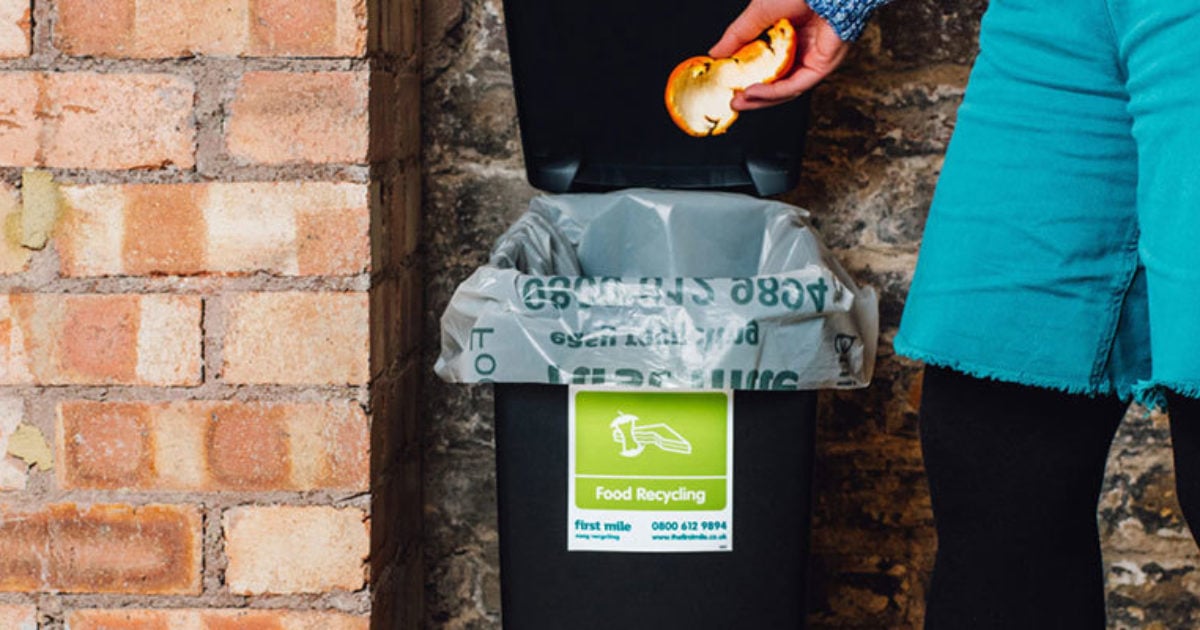
Office food waste recycling usually involves small caddies in kitchens, supported by a larger food recycling service.
Separating food waste is important. When mixed with other materials, it can contaminate entire recycling loads.
Residual waste
Residual waste is simply anything that cannot be recycled.
In offices, this might include:
- Certain plastic wrappers
- Contaminated packaging
- Non-recyclable stationery
- Mixed materials that cannot be separated
This waste should be kept separate using a dedicated general waste collection to ensure dry mixed recycling remains clean and usable.
Reducing how much ends up in this stream is key to sustainable office waste management. It also helps you avoid sending unnecessary waste to landfill. If you want to understand why that matters, it’s worth exploring why landfill is such a problem.
How to set up a simple office recycling system
A good office recycling system should be clearly-labelled and easy for staff to understand. When the setup is simple, recycling becomes a quick and natural part of the work day.
Clear bins, good placement and consistent rules all support effective workplace waste segregation.
Place recycling where waste is created
One of the most effective ways to improve recycling is to place bins where waste actually appears.
For example:
- Kitchens: food waste and mixed recycling
- Printer areas: paper recycling
- Breakout spaces: mixed recycling for drinks containers
- Central waste points: residual waste bins
When recycling bins are easy to reach, staff are more likely to use them properly.
Good placement also reduces the risk of recyclable materials being thrown into general waste.
Use clear bin labels and signage
Your office recycling bins should be easy to understand at a glance.
Good signage includes:
- Colour coded bins
- Simple instructions
- Visual examples
For example, a mixed recycling bin might show images of bottles, cans and cardboard.
Posters in kitchens or waste areas can also remind staff what should and should not go in each bin.
This helps reduce confusion and lowers the risk of recycling contamination in offices.
Keep recycling systems consistent
Consistency makes workplace recycling easier for everyone.
What if my office has multiple floors or departments?
Try to keep the recycling setup the same across the building to make it as simple as possible.
For example:
- Use the same bin colours everywhere
- Apply the same recycling rules across departments
- Place bins in similar locations on each floor
When staff see the same system everywhere, they don’t have to guess how recycling works in different areas.
If you introduce new recycling streams or change bin layouts, make sure the update is communicated clearly so everyone understands the change.

How recycling works in shared offices and coworking spaces
Recycling for small offices and shared spaces comes with a few extra challenges.
In many coworking environments, multiple businesses share kitchens, breakout areas and waste stations. The building manager or workspace operator usually organises waste collections.
To make recycling in shared workspaces work smoothly, clear systems are essential.
A simple approach works best:
- Central recycling hubs for each floor
- Clearly labelled bins for mixed recycling, food waste and residual waste
- Simple signage explaining the recycling rules
When everyone follows the same system, recycling becomes much easier to manage.
If you manage or operate shared offices, you can explore tailored recycling services for offices designed to work in these environments.
Common office recycling mistakes (and how to avoid them)
Even well-intentioned recycling systems can run into problems.
One common issue is having too many bin types. This can overwhelm staff and lead to confusion.
Another frequent problem is poor signage. If staff are unsure where items go, they may put them in the wrong bin.
Food contamination is another challenge. For example, leftover food placed in recycling bins can contaminate paper and cardboard.
Here are a few simple fixes:
- Reduce the number of bin types where possible
- Add clear labels and visual guidance
- Place food waste bins close to kitchen areas
- Share short recycling guides with staff
The easier you make it for tenants or employees, the better your results will be.
Beyond the basics: other waste streams offices should plan for
In addition to everyday recycling, offices often produce other types of waste that require specialist recycling.
You may also need to manage:
- Confidential paper, which may need secure shredding
- Printer toner cartridges
- Electrical equipment such as monitors, keyboards and cables
- Office furniture during refurbishments or moves
These require specialist business recycling services and should be planned as part of your wider office waste management strategy.
Having clear visibility over your waste can also help. Tools like digital waste tracking and platforms such as RecycleID make it easier to understand what you’re producing and where improvements can be made.

Make Simpler Recycling work for your office
Simpler Recycling is designed to make workplace recycling clearer and more consistent.
For most offices, compliance simply means separating a few key waste streams and ensuring recycling bins are clearly labelled and easy to use.
A clear system helps make office recycling easier for staff and simpler for managers to oversee.
A well-organised system helps your business:
- Stay compliant with recycling regulations
- Reduce general waste
- Support sustainability goals
If you’re reviewing your current setup, now is a good time to take a fresh look at your business waste and recycling services and make sure they support the way your office actually works.
Frequently asked questions about office recycling
What is Simpler Recycling for offices?
Simpler Recycling is a government initiative that standardises recycling rules for workplaces in England. Offices must separate key waste streams such as dry recyclables, food waste and residual waste so materials can be recycled more effectively.
What waste does an office have to separate?
Offices must separate three main types of waste:
- Dry mixed recycling such as paper, cardboard, plastics, cans and glass
- Food waste from kitchens and staff areas
- Residual waste that cannot be recycled
This helps prevent recyclable materials from being contaminated by general waste.
How many recycling bins does an office need?
The number of bins depends on the size of the workplace. Most offices typically need:
- A mixed recycling bin
- A food waste bin in kitchen areas
- A residual waste bin for non-recyclable items
Larger offices may also add dedicated paper recycling bins near printers.
Does Simpler Recycling apply to small offices?
Yes. The rules apply to all workplaces in England.
However, micro-firms with fewer than 10 employees have a longer transition period and must comply by 31 March 2027.
How can office managers encourage staff to recycle properly?
Clear systems make recycling easier for everyone.
Office managers can improve recycling by:
- Placing bins where waste is generated
- Using clear labels and signage
- Keeping recycling systems consistent across the workplace
- Sharing simple guidance with staff
When recycling is easy and convenient, people are far more likely to do it correctly.