




On 15 October 2026, First Mile attended and sponsored the Waste Leadership Summit at No. 4 Hamilton Place in Mayfair, hosted by letsrecycle.com. Senior figures from across the waste sector, retail, manufacturing, local government and finance gathered to discuss making commercial reality and environmental sustainability work hand in hand.
The summit tackled structural questions across the circular economy, with a key focus on electronic waste. With changing regulations, regular fire risks and shifting retail packaging rules, hearing from senior leaders helps inform and shape practical solutions that work for businesses on the ground.
Our Roundtable on E-Waste and Vapes
Over lunch, First Mile Operations Director Lukasz Czech chaired a dedicated roundtable focused on one of the waste industry's most challenging items, vapes and small electricals.
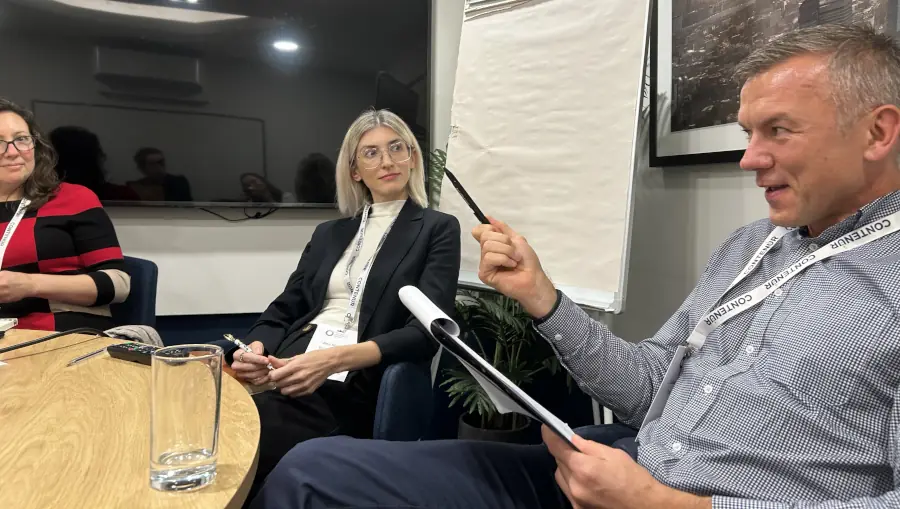
The session brought together an experienced cross-section of policy specialists, compliance leaders and infrastructure operators:
-
Patrick Brighty, Head of Recycling Policy at the Environmental Services Association (ESA)
-
Susan Evans, Policy Lead at Resource Futures
-
Prof. David Greenfield, Managing Director at SOENECS Ltd
-
Niamh McBride, Environmental Partnerships Lead at Material Focus
-
Michael Jennings, Policy & Public Affairs Advisor at Beyondly
-
Paul Wakelin, Head of Operations at CWM Environmental
To kick off the session, Lukasz put three direct questions to the room:
-
Are we starting to make progress in changing public behaviour around vape disposal?
-
What legislative changes are needed to get vapes into the correct waste streams?
-
What are we missing in current communication and awareness campaigns?
What the Room Said
The discussion moved quickly past surface-level observations into the operational, financial and behavioural realities of handling vapes.

The Growing Problem with Vapes
The room highlighted that while vapes are classified as electrical equipment under waste electrical and electronic equipment (WEEE) regulations, enforcement around their disposal has historically lagged behind. Until recently, vapes sat within Category 7 alongside toys, obscuring the specific hazards they carry.
The economic cost of managing them is disproportionately high. According to figures shared by the roundtable panel, handling and treating vapes costs over £1,000 a tonne. Because very few local authorities provide kerbside collections for vapes, millions end up mixed into general waste bins.
When compactors in collection lorries or recycling facilities crush discarded vapes, the enclosed lithium-ion batteries puncture easily. The consequences are severe. Data published by the Environmental Services Association (ESA) revealed 1,518 fires across waste and recycling facilities in the year to March 2026. The ESA estimates battery-induced fires cost the UK economy more than £1 billion annually, accounting for 40% of all reported recycling centre fires, with industry estimates suggesting the actual proportion could be as high as 70% (battery fires burn so fiercely that pinpointing the cause is often difficult).
Public Behaviour and the Case for a Deposit
Public awareness remains a significant hurdle. Research from Material Focus indicates that since 2022, around 1.2 billion disposable-style vapes have been purchased in the UK, with roughly 750 million binned or littered. While restrictions on single-use vapes came into force from June 2025, rechargeable pod devices and high-capacity models have largely replicated the same disposal habits. Material Focus findings show that around 8.2 million vapes are discarded incorrectly each week, and 77% of vapers say they lack clear information on how to recycle them.
The roundtable panel shared data showing that only 4 in 10 consumers are currently willing to recycle vapes under existing conditions. In contrast, research cited by the panel revealed that 9 in 10 people would return used devices if a formal deposit return scheme (DRS) were established.
The room agreed that behavioural change must lead the conversation rather than financial penalties alone. Clearer public communication that directly addresses fire dangers could help shift consumer perception from seeing vapes as disposable items to recognising them as hazardous electrical devices.
Structuring a Workable Return System
The panel explored how a viable return scheme might work in practice. The room discussed an account-based model where buyers register a purchase through an account and receive their deposit back upon returning the device to an authorised point. This mechanism avoids placing an administrative or financial cash-flow burden on individual retail staff.
The room also raised critical design factors:
-
Age verification: Strict age limits must apply to deposit redemptions so that minors are not incentivised to collect, handle or trade discarded vapes for cash rewards.
-
Market protection: Return infrastructure must be secure, preventing drop-off hubs from fueling an illicit secondary market for counterfeit or illicit devices.
Retailer and Producer Accountability
Panellists noted that high-street vape take-back engagement remains inconsistent. While reputable businesses often comply with take-back rules, informal or non-compliant vape shops frequently fail to offer collection facilities.
The panel agreed that real progress depends on bringing producers and importers firmly into the loop through tighter licensing and mandatory packaging instructions. Similar to the regulatory models governing drinks containers, creating a legal obligation for retailers to host take-back points establishes the physical collection infrastructure necessary for national compliance.
Legislation and Viable Targets
Attendees emphasised that statutory targets must be commercially and operationally viable. Without realistic benchmarks and stable policy direction, regional operators cannot justify long-term investments in dedicated sorting technology. The panel concluded that updating the law to ringfence vapes into their own clear waste stream is essential for creating consistent standards across the country.
The Benefits of a Dedicated Return Route for Vapes
Segregating vapes from other domestic and commercial waste streams delivers three major benefits:
-
Fire prevention
Keeping batteries out of collection trucks and sorting lines removes the primary ignition source for waste fires, protecting collection crews and facility operators.
-
Infrastructure investment
A predictable, segregated volume of e-waste encourages recycling specialists to invest in automated sorting, battery shredding and material recovery technologies.
-
Lower recycling costs
When devices arrive clean and unmixed, dismantling and processing costs fall substantially, creating a cheaper, more circular system for compliant producers.
Managing Discarded Vapes at Work
For commercial facilities, offices and retailers, letting vapes slip into regular bins creates a genuine fire hazard and compromises sustainability reporting.
-
Separate at the source: Never place vapes, batteries or e-waste into general waste or dry mixed recycling containers.
-
Set up dedicated drop-off points: Provide marked containers in staff rooms, communal hubs or customer areas using a specialised vape recycling service.
-
Manage compliance: Ensure your electrical waste processes comply with current Duty of Care rules by reviewing our lithium battery recycling guide and wider WEEE recycling advice.
From Policy to Practical Action
Taking part in the Waste Leadership Summit is about representing day-to-day operations, from policy to practical action. Our operations director, Lukasz, observed:
"Customers ask us what to do with vapes. Most of them want to get it right, but nobody has told them where vapes should go. Clear rules and a simple route back would make life easier for them and for us."
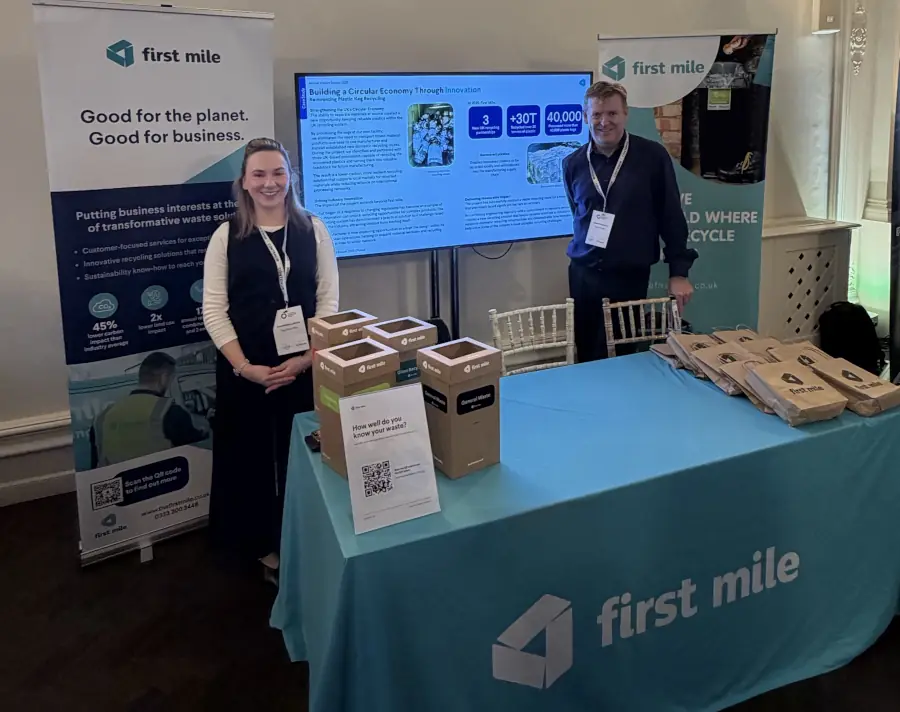
Practical circularity relies on clear and accessible processes. If you want to know more about any of the issues within this blog or advice on a changing regulatory landscape, speak to a First Mile consultant who will provide you with free and practical advice.
Why cannot used vapes go into regular business recycling bins?
Vapes contain rechargeable lithium-ion batteries alongside plastic, glass and circuit boards. When compressed inside general waste or dry mixed recycling compactors, lithium batteries can spark and cause intense, fast-spreading fires. They must always be collected in dedicated, spark-proof containers.
What is the most effective way to dispose of vapes in the workplace?
Workplaces should install separate, clearly marked collection boxes for vapes and batteries in reception areas, canteens or smoking zones. A specialist commercial partner then collects and transports them safely to licensed recycling facilities.
Are UK retailers legally required to take back old vapes?
Yes. Under existing regulations, retailers that sell electrical goods, including vapes, must provide a free take-back service on a like-for-like basis, regardless of whether the customer purchased the original item in their store.
What happens to a vape during the recycling process?
Vapes are carefully disassembled to isolate their individual components. The casing and outer plastic are granulated, while the lithium-ion batteries are safely neutralised so valuable critical raw materials, such as lithium, cobalt and nickel, can be refined and reused in new manufacturing.
Is the UK planning to introduce a deposit scheme for vapes?
The waste management sector and environmental organisations have strongly advocated for a mandatory deposit return scheme on vapes to drive return rates and reduce litter. While a drinks container scheme is scheduled, industry consultations continue over how an account-based or point-of-sale deposit model could be applied specifically to vapes.

