





At a glance
- Most UK retailers must now separate food waste from general waste to stay compliant
- In England, this is part of simpler recycling rules introduced in March 2025
- Wales and Scotland have different thresholds and requirements, so location matters
- Food waste includes unsold stock, prep waste and food from staff or customers
- You must arrange collection through a licensed waste provider
- Reducing waste comes first, including donating surplus food where possible
- Clear bins, staff training and reliable collections make compliance much easier
If you run a shop, supermarket or convenience store, food waste rules have probably started to feel more complicated recently. Different nations have different requirements, and it’s not always obvious what counts as food waste or how to handle it correctly.
However, it’s simpler than it sounds once you break it down.
At First Mile, we help retailers put practical systems in place every day, from small convenience stores to multi site operations. The key is keeping everything simple, clear and easy for teams to follow.
In this guide, we’ll explain:
- What the rules are
- What counts as food waste
- How to set up your store properly
- What retailers can do now to stay compliant
Everything is based on how stores actually work day to day, from stockrooms and shop floors to staff kitchens and customer areas.
What retail operators need to do now
Most retailers now need to separate food waste, provide clear bins and arrange collections to stay compliant.
To meet retail waste management compliance requirements, you’ll need to:
- Separate food waste from general waste
Food must be kept in its own waste stream - Set up clearly labelled bins
Make it easy for staff and customers to use correctly - Arrange food waste collection
Use a licensed provider like First Mile - Follow nation-specific rules
England, Wales and Scotland all differ - Train your team
Staff need to understand what goes where - Prevent contamination
Keep food waste, recycling and general waste separate
This is the foundation of compliant food waste collections for retailers and a key part of running a cleaner, more efficient store.

What are the current food waste rules for retail businesses in England?
In England, Simpler Recycling for retail businesses means separating key waste streams so materials can be processed correctly.
Under current food waste regulations, most businesses must separate waste into four streams:
|
Waste type |
Example |
|
Food waste |
Unsold sandwiches |
|
Dry recycling |
Bottles, cans, plastics |
|
Paper and card |
Cardboard boxes |
|
General waste |
Non-recyclable materials |
This applies to all waste produced by your business, including:
- Staff kitchens
- Customer bins
- Food-to-go areas
If your business has fewer than 10 employees across the whole company, you have until March 2027 to comply fully.
Employee count applies to the entire business, not individual stores.
Many retailers are already adapting to new nationwide recycling changes affecting businesses.
Getting your setup right helps:
- Ensure waste is processed properly
- Reduce contamination
- Avoid rejected collections or extra costs
How do food waste rules differ in Wales and Scotland?
There isn’t one single UK wide rule. Business food waste legislation varies depending on where your store operates.
Wales
- Food waste must be separated if you produce 5kg or more per week
- Applies widely across retail
- Strong enforcement and clear expectations
Scotland
- Food waste separation is required above certain thresholds
- Some rural exemptions may apply
For multi site retailers:
- You need to check rules for each location
- You can’t assume one setup works everywhere
Many retailers apply a consistent approach across all sites to support retail sustainability waste compliance.
What counts as food waste in a retail setting?
In simple terms, food waste in retail is any food your business can’t sell or use.
Food waste typically includes:
- Unsold food such as out-of-date sandwiches or ready meals
- Damaged stock with broken packaging
- Food prep waste from deli counters or cafés
- Staff food waste like leftovers or tea bags
- Customer waste from food-to-go areas
There are also some edge cases to watch out for:
- Packaged food still counts as food waste
- Liquids like milk or soup may need careful handling
- Heavily contaminated packaging shouldn’t go into recycling
Handling food waste responsibly can support your business’s wider environmental goals. Clear definitions across all sites makes food waste segregation much easier for staff to follow consistently.
Do shops need separate food waste bins?
In most cases, yes.
To stay compliant, retailers need separate food waste bins as part of their standard waste setup.
Separate bins help:
- Keep food waste ready for proper processing
- Prevent contamination of recycling
- Meet legal requirements
The right setup depends on:
- How much waste you produce
- How often collections happen
- The size and layout of your store
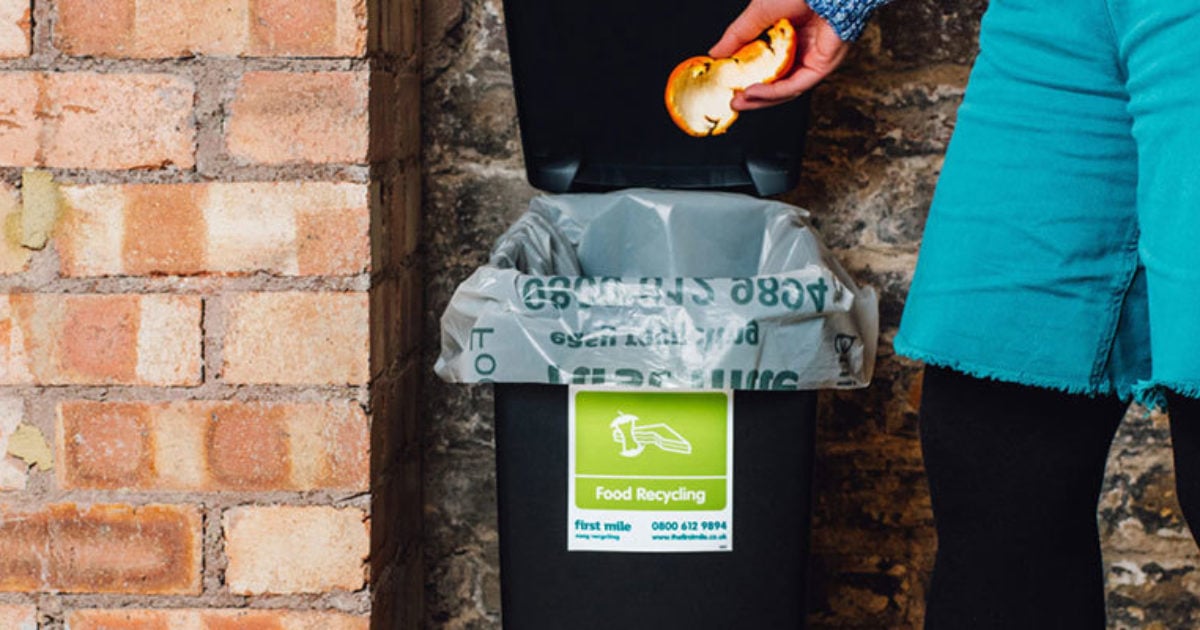
Even smaller stores benefit from simple, clearly labelled bins placed in the right locations.
How to set up food waste separation in your store
This section shows how to separate food waste in retail settings in a simple, practical way.
Setting up food waste segregation for shops is simpler than it sounds. Focus on where waste is created and make it easy for staff and customers to do the right thing.
Back-of-store and stockroom
Use dedicated bins for:
- Unsellable stock
- Damaged food
Place bins close to where waste is generated and avoid mixing food with packaging.
Staff areas
Provide smaller bins:
- Near sinks or prep areas
- Easy to access during busy shifts
Simple systems work best because staff are more likely to use them consistently.
Customer-facing areas
If customers dispose of food in your store, it’s your responsibility to manage it correctly.
- Use clear signage such as “food waste only”
- Consider dual-bin systems
Collections and storage
To keep things running smoothly:
- Use sealed bins to manage hygiene
- Schedule regular collections
- Avoid overflow
A reliable food waste recycling service can make this much easier to manage day to day.
What should retailers ask their waste collector to confirm?
As a retailer, choosing the right provider is an important part of staying compliant with waste regulations.
Ask:
- Are you a licensed waste carrier?
- How is food waste processed?
- Are recycling streams kept separate?
- What happens if contamination occurs?
- What documentation will I receive?
Your business still remains responsible for its waste, so it’s important to understand the wider framework of UK business recycling requirements and responsibilities.
How can retailers comply with simpler recycling?
A simple process makes compliance much easier.
- Audit your waste
Identify what you produce - Set up waste streams
Food, recycling and general waste - Install bins
Place them where waste is created - Train staff
Keep instructions clear and practical - Arrange collections
Make sure services are regular and reliable - Monitor and improve
Spot contamination early and adjust where needed
Digital waste tracking is also on the way, which means businesses will need more accurate reporting over time.
Putting the right systems in place brings practical, environmental and cost-saving advantages for your business.
What happens if recycling or food waste is contaminated?
This is one of the most common issues affecting retail waste management compliance.
If contamination happens:
- Waste may be rejected
- It may be sent to general waste instead
- Costs can increase
- You could risk non-compliance
To reduce the risk of contamination:
- Use clear signage
- Keep systems simple
- Train staff regularly
Reducing contamination in your waste streams also avoids unnecessary landfill.
How should retail operators handle unsold but still edible food?
The best approach is to follow the food waste hierarchy.
- Reduce waste
Improve stock control and ordering where possible - Redistribute food
Donate surplus food through charities or redistribution partners - Recycle food waste
Use food waste collections for anything that can’t be reused or donated.
Common food waste compliance mistakes retailers make
These are some of the most common issues affecting retail food waste compliance in day-to-day operations:
- Mixing food with general waste
Fix this with separate bins - Ignoring customer bins
Include them in your waste setup - Assuming rules apply per store
Check requirements across the whole business - Poor signage
Use clear labels and simple instructions - No staff training
Include waste procedures in onboarding
For multi-site operators, consistency is vital in making your approach to food waste regulations effective. Working with a licensed waste management provider across your retail estate helps avoid confusion.
Retail food waste compliance checklist
Use this checklist as a quick guide:
- Separate food waste
- Provide clearly labelled bins
- Train staff
- Use a licensed collector like First Mile
- Monitor contamination
Keeping things simple is usually the best way to stay compliant long term.

Keeping retail food waste compliance simple
Retail food waste compliance doesn’t need to feel overwhelming.
Once the right setup is in place, it becomes part of your everyday routine. Clear bins, trained teams and reliable collections make a huge difference.
At First Mile, we help retailers build practical waste systems that work in real stores, not just on paper. Whether you run one convenience store or multiple sites, we can help you stay compliant while keeping things simple for your team.
Retail food waste compliance FAQs
What are the food waste rules for retail businesses in England?
Most retail businesses in England must now separate food waste, recycling and general waste under simpler recycling rules introduced in March 2025. This applies to all waste generated by the business, including staff and customer waste. Smaller businesses have until 2027 to comply.
Do convenience stores need food waste collection?
Yes. Most convenience stores need separate food waste collection if they produce food waste. Requirements depend on location and size, but separating and arranging collection is now expected across most UK retail settings.
What are the four waste streams retailers need to separate?
Retailers in England typically separate waste into four streams: food waste, dry recycling such as plastics, metals and glass, paper and card, and general waste. This helps reduce contamination and ensures materials are processed correctly.
Do customer-facing bins count under food waste rules?
Yes. Any waste produced on your premises, including customer waste, is your responsibility. If customers dispose of food in your store, you must ensure it’s handled and separated correctly.
How do food waste rules differ between England, Wales and Scotland?
Rules vary by nation. England uses simpler recycling, Wales applies a 5kg weekly threshold, and Scotland has its own thresholds and exemptions. Multi-site businesses must check requirements for each location.
What records should a retailer keep to show waste compliance?
Retailers should keep waste transfer notes, details of their waste carrier, and records showing how waste is separated and collected. These help demonstrate compliance and ensure waste is handled correctly.
What changes are coming next with digital waste tracking?
Digital waste tracking will require businesses to record and report waste more accurately. This will improve transparency and reduce waste crime, so retailers should prepare for more structured reporting.