






Managing business recycling bins across multiple sites can feel messy. Different buildings. Different teams. Different landlords. And now Simpler Recycling adds clearer separation rules on top.
You might run offices, retail stores or hospitality venues. Each site does things slightly differently. That makes consistency hard.
But simpler recycling for businesses is meant to do the opposite. It gives you a clear framework. The challenge is building one system that works everywhere.
By the end of this guide, you’ll have:
- A minimum compliant bin kit
- Clear signage rules
- A step by step rollout plan
- A quick audit method for ongoing control
We help businesses make recycling straightforward across offices, retail and hospitality sites. Here’s how you can do the same across your estate.
What Simpler Recycling means for your business recycling bins
In England, most workplaces need to separate waste into three main streams for collection under workplace recycling legislation England:
- Dry recycling
- Food waste
- Residual waste
This sits under the wider workplace recycling requirements in England and applies to waste from employees, customers and visitors.
Dry recycling
Dry recycling includes common materials such as:
- Plastic drinks bottles
- Cans and tins
- Glass bottles and jars
- Cardboard packaging
- Office paper
This is often called mixed recycling. However, business waste separation rules may require separate paper and card collection unless your waste collector has assessed that collecting them together is acceptable.
Food waste
If food is produced on site, you’ll usually need business food waste collection. That includes:
- Leftovers
- Tea bags and coffee grounds
- Food prep waste
- Out of date stock
This applies to offices with tea points as well as recycling bins for retail and hospitality sites with kitchens or service areas.
Residual waste
Residual waste is what’s left. It includes items that cannot be recycled in your setup, such as:
- Contaminated packaging
- Certain composite materials
Keep this stream as small as possible. Sending waste to landfill has environmental and cost impacts, which is why landfill is such a problem.
What about paper and card?
Paper and card may need their own container for collection separate from other dry recycling. If your collector confirms co collection is acceptable, you can combine them.
If you’re standardising recycling bins across sites, build a system that can handle both options:
- Separate paper and card where required
- Clear mixed dry recycling where permitted
Micro firms
If your organisation has fewer than 10 full time equivalent employees across the whole business, not per site, you’re temporarily exempt until 31 March 2027.
This sounds like a lot. It is more structured than before. But a clear office recycling set up makes it easy for everyone to do the right thing and stay on top of commercial waste compliance.
For a broader view of the rules, see business recycling laws.

Why bin standardisation across estates is the easiest way to reduce risk
Without standardisation, multi-site waste management quickly becomes inconsistent.
Here’s what typically goes wrong:
- Different bins and labels at each site
- Staff move between sites and get confused
- Confusion leads to contamination
- Contamination means recycling is rejected or downgraded
- Training becomes harder and slower
When you standardise recycling bins across sites, you:
- Help staff adopt the system faster
- Give tenants one clear set of rules
- Reduce recycling contamination at work
- Spend less time fixing bin issues
- Build a stronger estate-wide waste strategy
It also looks more professional to tenants and visitors.
The estate standard – your minimum viable compliant bin kit
Most estates can start with a core kit, then add extras only where waste volumes demand it.
Think of this as your minimum baseline for commercial waste compliance. You can then scale up per site.
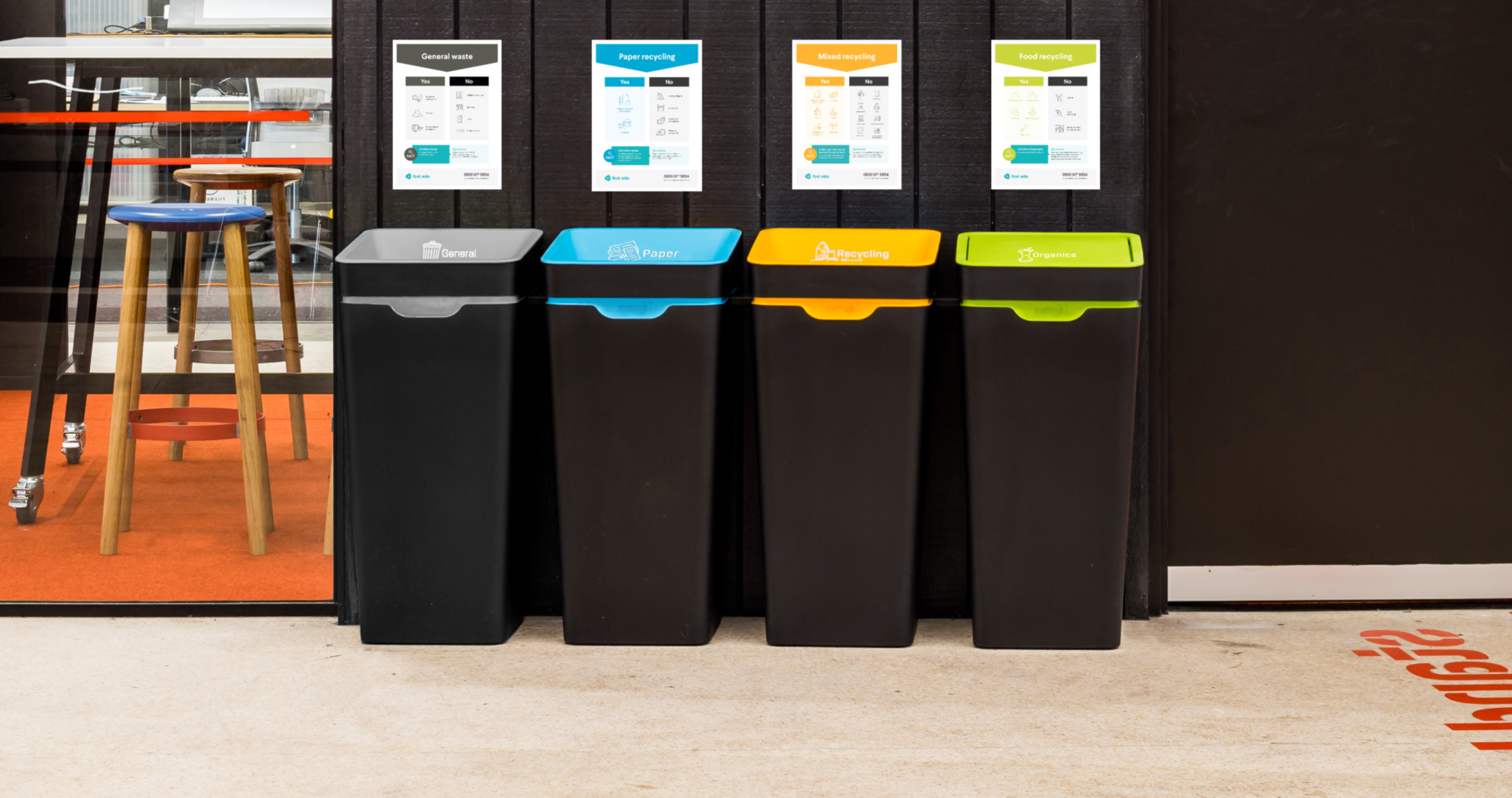
Your core waste streams
Your default kit should include:
- A general waste bin at every key waste point
- A dry recycling bin at the same points
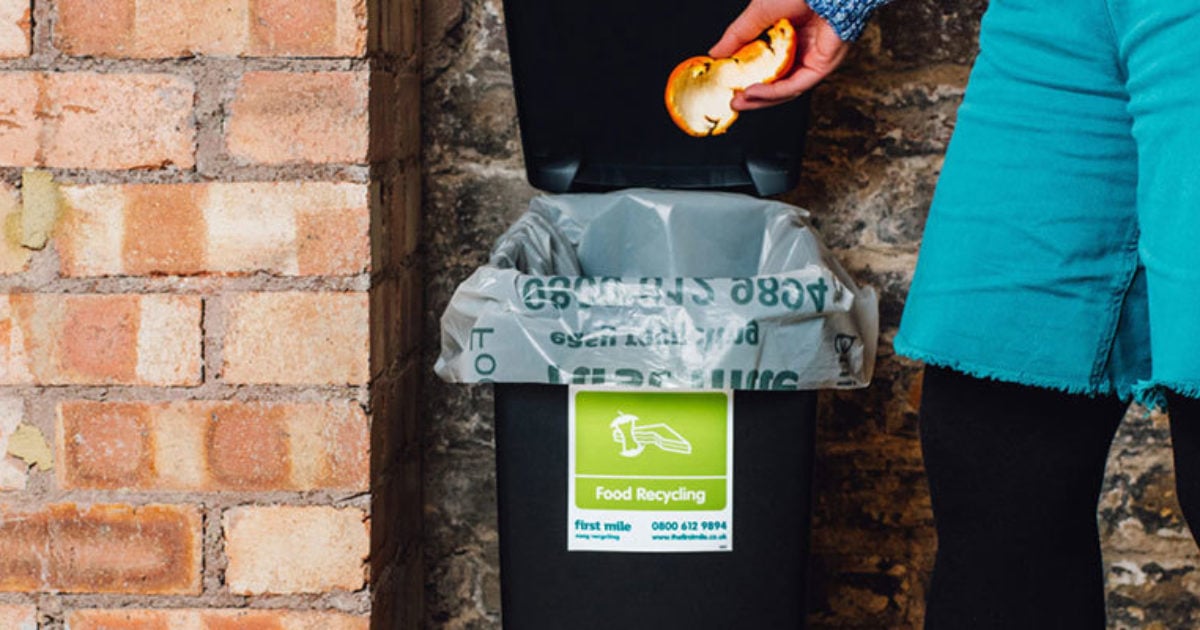
- A food waste bin wherever food is generated
- A paper and card bin where required or where volumes are high
Food waste bins usually sit in:
- Kitchens
- Break rooms
- Hospitality prep or service areas
Paper and card bins often work well in:
- Offices
- Print rooms
- Reception areas
Do not rely on colour alone. There is no legally mandated colour system. What matters is consistency.
Use the same naming convention across all sites:
- Dry recycling
- Paper and card
- Food waste
- General waste
That consistency supports simpler recycling for businesses and reduces confusion.
Where the bins should go
Put bins where the waste happens, not where it’s easiest to store them.
Pair general waste and recycling bins together. If people have to hunt for the right bin, they’ll take shortcuts.
Typical hotspots include:
- Desks and printer areas – paper and card plus dry recycling
- Kitchens and tea points – food waste, dry recycling and general waste
- Reception and shared areas – dry recycling and general waste
- Back of house in retail and hospitality – food waste, dry recycling and general waste in staff zones
If you only put recycling in one corner, contamination rises because people take the quickest option.
Signage and labelling that works across every site
Your recycling bin signage for offices and other workplaces is what makes the system work, especially when bin types and colours vary.
Follow these simple rules:
- Use the same labels everywhere with the same words and icons
- Add two to four common examples such as bottles, cans, tins and clean card
- Add one or two common mistakes such as no food in dry recycling or no liquids
- Use large font and high contrast colours
- Place labels at eye level on the lid or front
Bin colours are not consistent everywhere. Do not rely on colour alone. Your label is the standard.
To make it stick, use the same poster format in every kitchen and back of house area. Consistency reduces recycling contamination at work.

A step-by-step rollout plan for multi-site bin standardisation
Rolling out a new estate-wide waste strategy doesn’t need to be complex. Using a repeatable framework can help.
Step 1 – Do a 30-minute site walk through
At each site, check:
- Where most waste is generated
- What bins already exist and how they’re labelled
- Where contamination is happening
- Where external bin stores are and who controls them
- Any space limits or landlord rules
This gives you a realistic view of your current office recycling set-up and highlights what needs to change.
Step 2 – Decide your estate standard
Define your standard clearly:
- Exact stream names
- Label templates
- Default bin pairings such as general plus dry recycling
- When to add food waste and paper and card
- Who owns updates, usually an operations lead
This forms the backbone of your multi-site waste management approach.
Step 3 – Align landlord, cleaner and collector roles
Even if a landlord or FM manages the waste contract, you still need waste handled correctly under workplace recycling requirements England.
Agree in writing:
- Who provides bins
- Who moves bins to collection points
- Who replaces signage
- What happens when contamination is found
Write it down so it survives staff turnover. Clear roles protect commercial waste compliance.
Digital waste tracking tools can also support transparency across sites.
Step 4 – Launch with simple comms
Keep the message short.
Here’s the new standard across all sites.
Show photos of the four streams.
If in doubt, use general waste. This reduces contamination while people learn.
Step 5 – Review after two to four weeks
Check your two biggest problem areas.
- Adjust label examples
- Move bins closer to where waste is created
- Resize bins if they’re overflowing
Small tweaks early on reduce recycling contamination at work long term.
Common estate challenges and what to do instead
You do not need a perfect building to meet business waste separation rules. Here are some common blockers and practical fixes.
“We don’t produce much food waste”
You still need a practical method for business food waste collection where it’s generated. Start with small bins at tea points and scale up if volumes increase.
“Our sites are all different”
Standardise stream names and labels first. Then adapt bin size and location to each layout.
“The landlord controls the bin store”
Standardise inside your premises. Agree a clear handover process to the external store and confirm separation rules.
“Visitors contaminate bins”
Keep the front-of-house simple with dry recycling and general waste. Handle more detailed separation back-of-house.
“Paper and card causes confusion”
Make separate paper and card collection clear where required. If co-collected with dry recycling, reflect that clearly in your labels.
Measuring success without turning it into a huge project
You don’t need a complex dashboard to track progress across sites.
Start with three simple metrics:
- Number of contamination incidents per site per month
- Overflow or extra collections required
- The top three wrong items found in recycling
Run a lightweight audit.
- Do a 10-minute weekly spot check of two or three bin stations
- Take a photo
- Note common mistakes
- Update signage examples if needed
This helps you reduce recycling contamination at work and evidence improvements internally. It also supports wider sustainability reporting and highlights the benefits of recycling for a business.
How First Mile can help you standardise business recycling bins across the UK
If you operate nationally, you need consistency you can trust.
A strong partner should offer:
- Clear waste streams and service standards
- Support designing an estate wide waste strategy
- Practical signage guidance
- Help aligning landlords and cleaning teams
- Ongoing reviews to reduce contamination
At First Mile, we support businesses across offices, retail and hospitality with reliable services, from mixed recycling to food recycling, glass recycling and general waste.
Tools like RecycleID make it easier for your teams to check what goes where in seconds. That keeps your business recycling bins consistent and compliant.
Explore our business waste and recycling services to see how a joined-up approach simplifies multi-site waste management.
Make recycling simple across every site
Standardisation is the shortcut to getting recycling right at scale.
- Start with a minimum compliant bin kit
- Use consistent stream names and labels
- Place bins where waste is created
- Review and refine after launch
Small changes, applied consistently, deliver cleaner recycling and stronger commercial waste compliance across your estate.
Talk to First Mile about standardising your business recycling bins across your estate.
Simpler Recycling FAQs
What bins do businesses need under Simpler Recycling?
In England, most workplaces need a practical setup to separate dry recycling, food waste and general waste for collection. Paper and card may also need separate collection depending on your collector’s setup. The rules apply to waste from employees, customers and visitors under workplace recycling legislation England.
Do offices need a food waste bin even if they don’t serve food?
Yes, if food waste is produced. Even small offices generate tea bags, coffee grounds and leftovers. The simplest approach is a small food waste bin in kitchen or tea areas, then scale up based on volume.
Can paper and card go in mixed recycling at work?
Paper and card may need separate collection unless your waste collector has assessed that co-collection is acceptable. Do not assume. Confirm your collection method and label your bins to match it so people don’t have to guess.
How do I standardise recycling bins across different sites and building layouts?
Create one estate standard with the same waste stream names, labels and signage format. Then adapt bin sizes and locations per site. Pair general and recycling bins together and place them where waste is created to reduce recycling contamination at work.
Who’s responsible if my landlord or facilities manager manages the waste contract?
You still need waste handled correctly under business waste separation rules, but day-to-day control may sit with a landlord or FM. Agree and document who supplies bins, maintains signage, moves bins to collection points and manages contamination issues.
What’s the quickest way to reduce recycling contamination?
Keep streams simple. Label bins clearly with two to four examples. Pair bins together. Fix placement first. Then run quick spot checks and update signage based on the most common mistakes.