


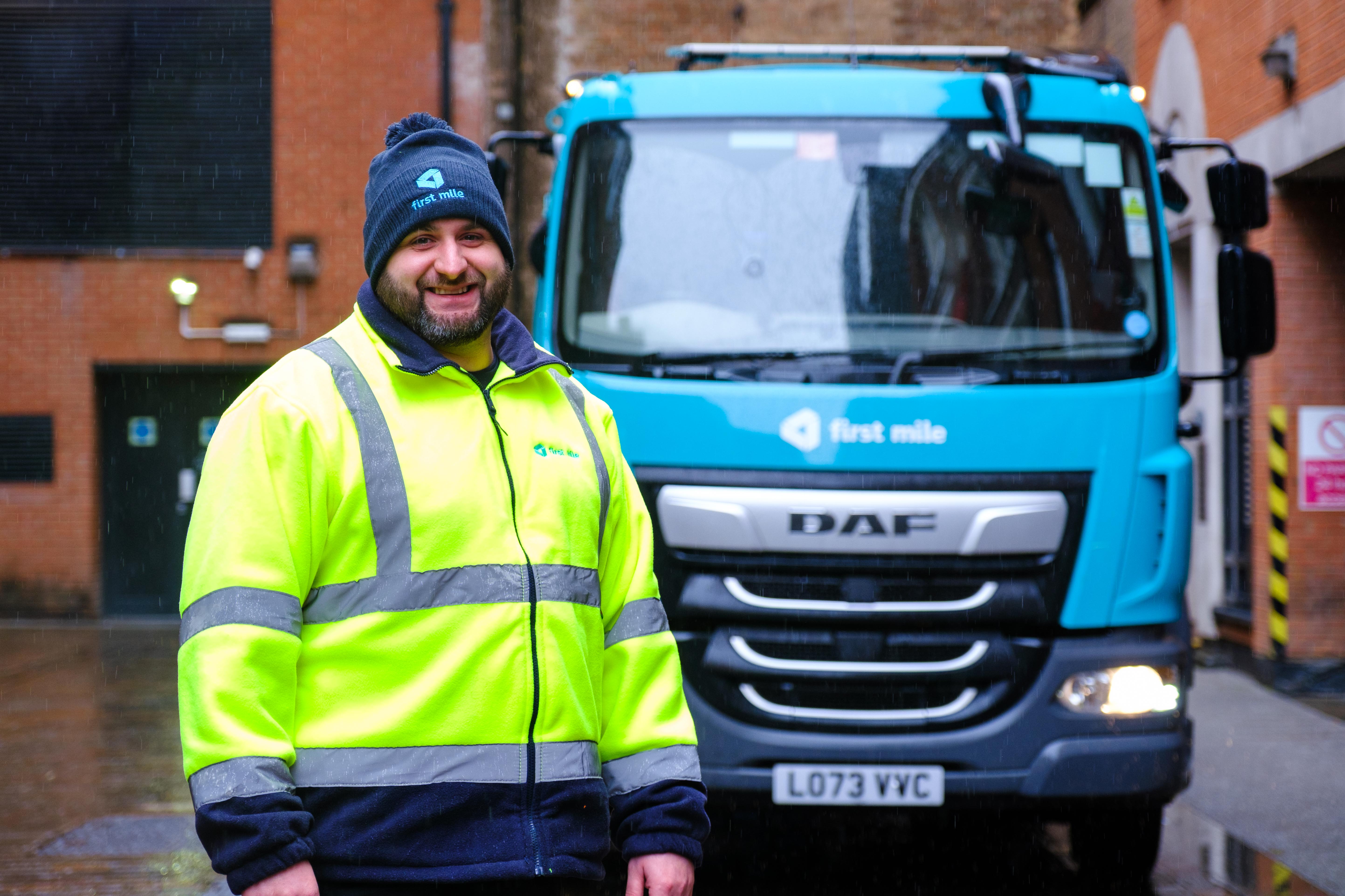


Vapes are one of the UK’s biggest waste problems. Uncertainty around how to dispose of vapes means millions of devices continue to end up in general waste every week, creating fire risks and environmental damage.
This guide clarifies the 2026 regulations, explains why vapes must stay out of the bin, and details how retailers, businesses and can handle vape disposal compliantly.
Quick answer: Where to dispose of vapes?
Never put vapes in standard bins. If you are looking where to dispose of vapes, take used vapes to a shop that sells them, who must accept returns, or find a drop-off point using the Recycle Your Electricals finder. Businesses must arrange a specialist vape recycling collection.
Key Facts (Updated November 2026):
- Disposable vapes were officially banned in the UK in June 2025.
- Retailers selling vapes must offer free take-back services for consumers.
- Businesses need dedicated collections for vapes to prevent bin fires.
- Vapes now fall under WEEE Category 15, ensuring producers fund their recycling.
Can vapes be recycled and why can they not go in the bin?
Yes, vapes can be recycled, but they must never go in a general waste or mixed recycling bin. Vapes contain electronic parts and lithium-ion batteries that require specialist processing. Mixing them with standard rubbish creates severe fire hazards and pollutes the environment.
People often ask can you put vapes in the bin or can you put disposable vapes in battery recycling? The answer to both is no. Disposable and rechargeable vapes contain plastics, a heating element, and a built-in battery. When you throw them away, they become Waste Electrical and Electronic Equipment. We call this WEEE for short, which refers to anything that has a plug or needs a battery to run. Because vapes contain both electrical components and batteries, they require a dedicated disposal route.
The below matrix provides a handy guide to help you decide how to dispose of vapes correctly:
| Item | Correct disposal method | Wrong disposal method |
|---|---|---|
| Disposable vapes | Retailer take-back or specialist WEEE collection | General waste or mixed recycling bin |
| Rechargeable vapes | Retailer take-back or specialist WEEE collection | General waste or mixed recycling bin |
| Vape cartridges and pods | Retailer take-back or specialist WEEE collection | General waste or mixed recycling bin |
| Standard batteries | Dedicated battery recycling bin | General waste or mixed recycling bin |
How to recycle vapes?
Vape recycling is a service offered by waste contractors. For individuals, ask the business you return your unwanted vapes to whether its waste provider recycles them. For businesses disposing of vapes, check with your contractor to see what vape disposal services they offer.
After unwanted vapes are returned, the typical vape recycling process follows this approach:
-
Built-in batteries are removed
-
At First Mile, batteries are taken to a specialist recycling company in the Midlands, where they’re sorted by battery type. Different types of batteries need different recycling methods (a laptop battery has different elements to an AA battery, for example), but they all contain valuable metals such as lead, nickel, zinc and cobalt.
-
The remaining elements of the vape are broken down by machine and by hand.
-
Individual components are sorted into different materials such as metals and plastics, and are cleaned.
-
Each waste stream is then processed by a specialist recycling company.
How must retailers handle vape recycling and disposal
Retailers selling vapes must offer a free, in-store take-back service for customers to return used devices. Online shops must also provide a postal return system or clear directions to a local drop-off network.
To avoid confusion, The Valpak WEEE Distributor Take-back Scheme (DTS) allows general electrical retailers to pay a financial fee to avoid having to take back old electronics in-store. However, the UK government completely excluded vapes from the DTS, so this scheme does not apply to vapes and e-cigarettes.
If you run retail businesses and shops that sell vapes, you have strict legal duties. You need to provide a dedicated drop-off bin for vape recycle returns on your premises. Once the bin is full, you must arrange a safe disposal collection through an authorised waste contractor to remain compliant with the latest environmental rules.
By providing a solution to customers asking themselves where to dispose of vapes near me, retailers have an opportunity to increase footfall and, with that, sales opportunities from new customers walking through the door.
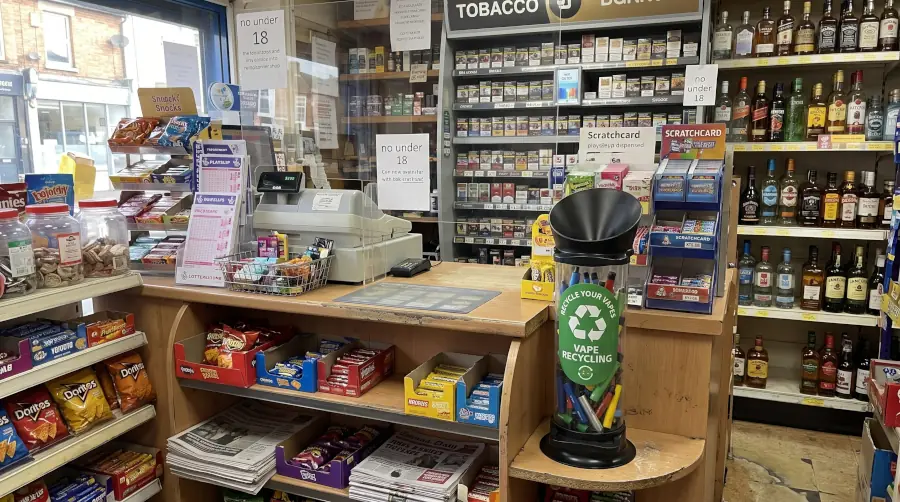
Retailer vape disposal recap
The Office for Product Safety and Standards produced this video to explain the rules for businesses selling vapes, but to recap, retailers should do the following for safe and compliant vape disposal:
- All distributors and retailers must provide a process to take back unwanted vapes.
- There is no size exemption, so if you sell vapes, you need to take them back.
- Vape waste must not be put in general waste.
- They must be disposed of properly by putting them in a dedicated waste vape bin.
- Once the waste bin is full, contact your waste vendor to arrange a collection.
- Ensure you keep collection records for four years.
What can go in a vape waste bin?
-
Disposable vapes: Complete single-use e-cigarettes.
-
Rechargeable vape kits and pod systems: Whole device kits containing internal or built-in lithium-ion batteries.
-
Vape pods and cartridges: Pods and vape cartridges, especially those with built-in coils or residual battery components/metal parts.
-
Vape batteries: Separate lithium-ion or standard vape/e-cigarette batteries.
What offices and hospitality venues should do
Offices and hospitality venues do not need to offer a take back service as they do not sell vapes. However, where employees, customers and guests dispose of vapes on business premises, workplaces must provide a dedicated, clearly marked bin for vapes and batteries to keep them out of general waste. Once full, businesses must book a specialist collection through a licensed waste carrier to ensure safe and legal disposal.
Offices, pubs, and restaurants frequently find vapes left behind in their bins. If you manage a workplace, you have a duty of care to train your staff on how to recycle vapes safely.
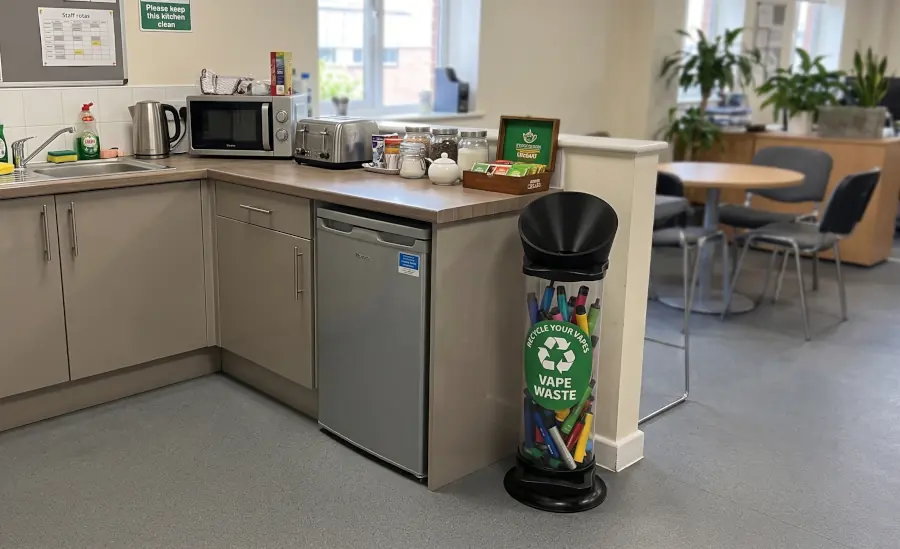
Here is a simple process for your business:
- 01 Provide a dedicated battery and vape bin clearly marked for staff and visitors.
- 02 Communicate the rules clearly to stop people throwing vapes in general waste.
- 03 Book a dedicated hazardous waste or WEEE recycling service to collect the container when it gets full.
What are the vape disposal rules in 2026?
The law requires safe and compliant vape disposal. According to guidance from the Environment Agency and information published on GOV.UK, anyone handling this waste must:
-
Use registered waste carriers to collect vape waste via dedicated streams.
-
Receive proper transfer notes showing the waste was handled safely.
The 2025 legislation update specifically separated disposable e-cigarettes, rechargeable vaping devices, vape pods, and charging equipment away from the toys category and into a new WEEE category, category 15.
With vapes and e-cigarettes in a dedicated category, vape producers must now pay the full cost of recycling their products and other sectors are not subsidising waste collection.
What are lithium-ion battery fire risks in general waste?
Vapes pose a serious fire risk in general waste. When bin lorries or recycling centres crush the waste, the lithium-ion batteries inside vapes can puncture and explode. These fierce fires put lives at risk and cost the UK waste industry millions every year.
At the First Mile Waste Leadership Summit 2026 roundtable, industry leaders discussed exactly how severe this issue has become. The panel noted that the economic cost of managing them is disproportionately high, with handling and treating vapes costing over £1,000 a tonne.
Data published by the Environmental Services Association (ESA) revealed 1,518 fires across waste and recycling facilities in the 12 months leading up to March 2026 alone. The ESA estimates battery-induced fires cost the UK economy more than £1 billion annually. Pinpointing the exact cause of fires is difficult because batteries fires burn so fiercely, but industry estimates suggest batteries cause up to 70 per cent of all recycling centre fires.
We believe it is a lack of awareness of how to dispose of vapes properly that contributes to the issues the waste industry is facing. Customers often ask us what to do with vapes. Most of them want to get it right, but nobody has told them where vapes should go.
The environmental impact of vapes
Vape waste causes severe environmental damage. Millions of incorrectly discarded vapes send valuable materials like lithium and copper to landfill every week, where toxic battery chemicals can leak into the soil and pollute local water supplies.
Even with the disposable vape ban in place, public habits have been slow to change as users switch to heavy rechargeable models. According to research by the recycling campaign group Material Focus published in 2026, around 8.2 million vapes are discarded incorrectly every single week. Since 2022, around 1.2 billion disposable style vapes have been purchased in the UK, with roughly 750 million simply binned or littered.
The same research shows that 77 per cent of vapers say they lack clear information on where to recycle disposable vapes. When vapes go to landfill, the lithium, cobalt, and nickel inside the batteries can leach into the ground. These are valuable materials that we could easily reuse if we processed them properly through recycling vapes.
Why vape recycling is difficult
Vapes contain a mix of materials and dangerous chemicals that make recycling of vapes difficult, requiring specialist recycling companies to process. The challenges of vape recycling include:
The economic benefits of vape recycling
Recycling vapes provides the UK with economic benefits. Valuable materials like lithium and copper, as well as plastic and other metals are sent to specialist processors to be re-circulated in the economy. As a result UK businesses can supply the market with materials needed domestically without the need to import them. Additionally, when using recycled materials, new ones do not need manufacturing or transporting, reducing green-house gas emissions.
How First Mile collects vapes
First Mile offers safe, compliant vape collections for UK businesses. We provide dedicated containers for vapes and batteries to ensure they remain separate from other waste streams. When full, we collect and transport them to specialist facilities where valuable materials are safely recovered.
To set up a straightforward and compliant vape recycling collection for your site, visit our business battery recycling collections page.
How do you dispose of vapes in the UK?
You must never put vapes in your normal rubbish or recycling bin. Individuals should take them to a retailer with a take-back scheme or a local recycling centre. Businesses must use a dedicated commercial vape and battery collection service.
Can you put vapes in the bin?
No, you cannot put vapes in any standard bin. They contain lithium-ion batteries that get punctured and crushed in waste lorries or recycling centres. This can cause dangerous fires that put lives at risk, destroy facilities, and cost the UK economy millions.
How to dispose of vapes?
If you are an individual wondering where to recycle vapes, you can use the Recycle Your Electricals postcode finder to locate a local drop-off point. Any shop selling vapes has a duty to take back old vapes meaning you can dispose of them there. If you are a business, you need to arrange a specialist waste collection from a licensed provider.
Can disposable vapes go in battery recycling?
You should not mix vapes with standard battery recycling unless the specific bin or collection service explicitly states that it accepts both. Always check the labels on the bin or ask your waste provider, as vapes often need separate treatment.
Can you recycle vapes with batteries?
You can only recycle them together if your waste contractor provides a specific bin designed for both. First Mile offers a combined service for businesses, but public drop-off points normally require you to keep vapes and standard batteries completely separate.
Are disposable vapes still banned?
Yes, the UK government officially banned the supply of single-use disposable vapes in June 2025. However, businesses must still correctly dispose of any leftover stock, and consumers must properly recycle all remaining single-use devices alongside their new rechargeable equivalents.
Are retailers legally required to take back vapes?
Yes. Retailers that sell vapes cannot join the national take-back scheme for other electronics, so they must offer free in-store take-back for customers. Online retailers must also provide a postal return system or explicitly direct their customers to a suitable local drop-off network.
What is WEEE Category 15?
Category 15 is a specific waste classification introduced in 2025 for vapes and e-cigarettes. It separates them from toys, meaning the producers of vapes now have to pay the true and full cost of safely recycling the products they put on the market.
How should a business dispose of vapes found at work?
A business should set up a dedicated vape drop-off bin on site. Staff and cleaners must know to keep vapes out of general waste. When the bin is full, the business must arrange a specialist collection through a licensed waste carrier.
Why are vapes a fire risk in bins?
Vapes contain lithium-ion batteries. When general waste is compacted in the back of a bin lorry or sorted at a waste facility, the heavy machinery can puncture the battery. This causes a chemical reaction called thermal runaway, creating a sudden, fierce fire.
Can you get money for recycling vapes?
No, there are currently no schemes where you can recycle vapes for money in the UK. Research shows that many people would support a formal deposit return scheme for vapes, but right now the focus is simply on safe, responsible, and free disposal.
Where can I recycle vape cartridges?
You should treat empty vape cartridges and pods just like the main device. Do not throw them in the regular bin, as they contain electronic elements and liquid residue. Take them to a dedicated vape return point or use a commercial electrical waste service.

