





After the hottest May day on record, El Niño on the way and headlines warning the UK is "built for a climate that no longer exists", it is easy to look at the recycling bin in your office and quietly think: does any of this make a difference? It's understandable to feel disheartened and wonder if there's any point in recycling. But we can promise you, it absolutely is.
Here is why recycling is one of the most practical climate actions your business has, and why it matters more than ever this World Environment Day.
Why World Environment Day matters more than ever in 2026
World Environment Day falls on 5 June, led by the United Nations Environment Programme. Its goal is simple to say and hard to do: halve global greenhouse gas emissions by 2030 and keep global warming below 1.5°C this century.
The last few weeks have shown exactly why that goal exists.
- Britain and much of Europe sweltered through a deadly early heatwave, with the UK recording its hottest ever May day and overnight temperatures that hardly dropped below 20°C.
- The government's own advisers, the Climate Change Committee, warned that the UK is "built for a climate that no longer exists" and that we should prepare for heatwaves topping 40°C across the country by 2050.
The committee was blunt that extreme heat is now the deadliest climate risk we face, and that how well we cope with it is still within our control.
- Writing in the Guardian, one climate scientist imagined a Britain in 2052 where people sleep in parks because their homes have become heat traps. It sounds dramatic until you remember the 2022 heatwave, when the UK passed 40°C for the first time and more than 3,000 people died early.
- The World Meteorological Organization told the world to prepare for the imminent return of El Niño, putting the odds at around 80% for June to August and near or above 90% through to November. It expects above average temperatures almost everywhere over the coming months, with hotter, drier conditions forecast for parts of Australia.
This is the backdrop businesses now operate in, and a good reason to look hard at what your organisation can control.
Why business waste is a climate issue
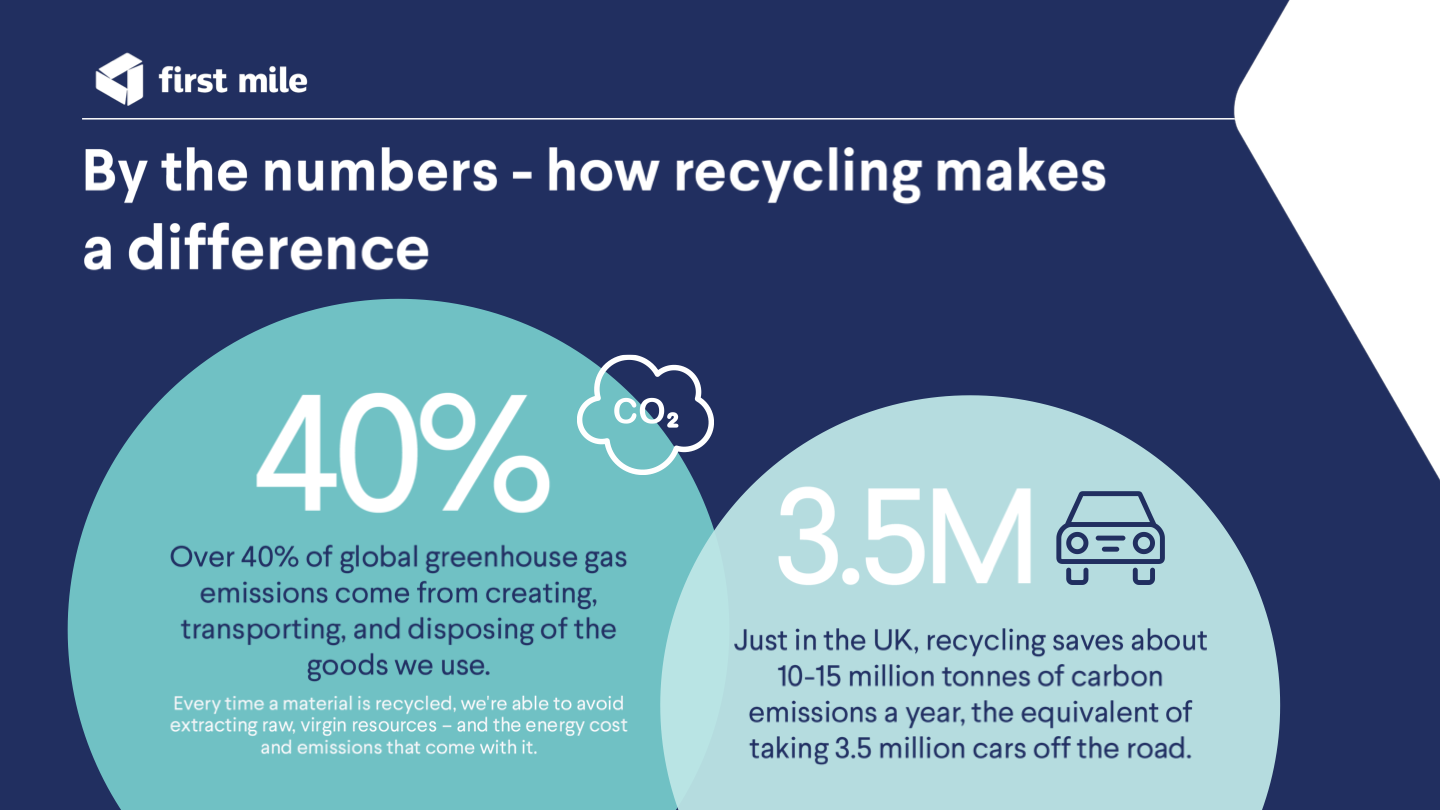
Here is the part that often gets missed. Around 40% of global greenhouse gas emissions come from the way we make, move and throw away the goods we use. That covers the whole life of a product: extracting the raw materials, the energy used to turn them into something useful, transporting them, and dealing with them once they reach end of life.
That means the things a business buys, uses and disposes of in its business waste are not a side issue to its carbon footprint. For most organisations, they are a large part of it. And unlike the weather, it is something you can act on this week.
The bit most people miss: recycling stops emissions before they happen
Every time a material is recycled, it removes the need to extract and process virgin raw materials. Producing materials from scratch is hugely energy intensive, from mining and drilling through to refining and manufacturing, and most of that energy still comes from burning fossil fuels. Recycling skips those stages, so the emissions are never created in the first place.
There is a second benefit that often gets overlooked. Leaving raw materials in the ground, and forests standing, protects the natural systems that absorb carbon dioxide from the atmosphere. Conserve those resources and you keep more of the planet's carbon stores intact. So, recycling does two jobs at once: it avoids the emissions of making things from scratch, and it helps preserve the resources and ecosystems that draw carbon back down.
The savings are not small:
- Aluminium: recycling saves around 95% of the energy needed to make it from virgin materials, roughly 14,000 kWh per tonne.
- Plastic (PET): up to 76% of energy saved, around 7,200 kWh per tonne.
- Paper: ~60% saved, around 4,100 kWh per tonne.
- Steel: ~60% saved, roughly 1,400 kWh per tonne.
Add it up across the country and recycling saves the UK an estimated 10 to 15 million tonnes of carbon a year, the equivalent of taking around 3.5 million cars off the road. Recycling also keeps waste out of landfill, where rotting material releases methane, and it protects the forests and natural systems that absorb carbon from the atmosphere. You can read more on how recycling reduces carbon emissions and why landfill is so damaging on our blog.
Why does avoiding emissions in the first place matter so much right now? Because the alternative, removing carbon from the air after it has already been emitted, is still a long way from being a real answer. The third State of Carbon Dioxide Removal report, published on 2 June, found that the world removes about 2.2 billion tonnes of CO2 a year, almost all of it through forests, and that current pledges fall short of what is needed by more than five billion tonnes a year by 2050. To close that gap, carbon removal would have to scale faster than solar power ever did. The report's own conclusion is the one worth holding onto: cutting emissions remains the first and most important priority.
Recycling is one of the simplest ways a business can do exactly that. It is proven, it is available today, and it does not depend on a technology that has not been built yet.
What does good business recycling actually look like?
We work with more than 30,000 UK businesses, and in 2025 we helped them avoid 133,000 tonnes of CO2e. Our own operations have a 45% lower carbon impact than the industry average, with thousands of collections made on zero-emission electric cargo bikes, high recovery and recycling rates, and nothing sent to landfill.
To have the best possible impact, we support businesses to follow good recycling practices that boost recycling rates and avoid contamination.
Contamination is when the wrong item ends up in a recycling stream. A half-full coffee cup, a greasy takeaway box, compostable packing put into food waste. It sounds minor but can have a real impact. Recycling facilities need clean, consistent material, and when contamination is found, an entire load can be rejected and sent to general waste.
"Wish-cycling" is also an issue - putting something in the recycling because you hope it can be recycled, rather than because you know it can. If you're not sure where something belongs, it's worth taking a moment to check rather than risking contamination.
The good news is that fixing this is mostly about better education, not more effort. The businesses that recycle well tend to do a few simple things consistently:
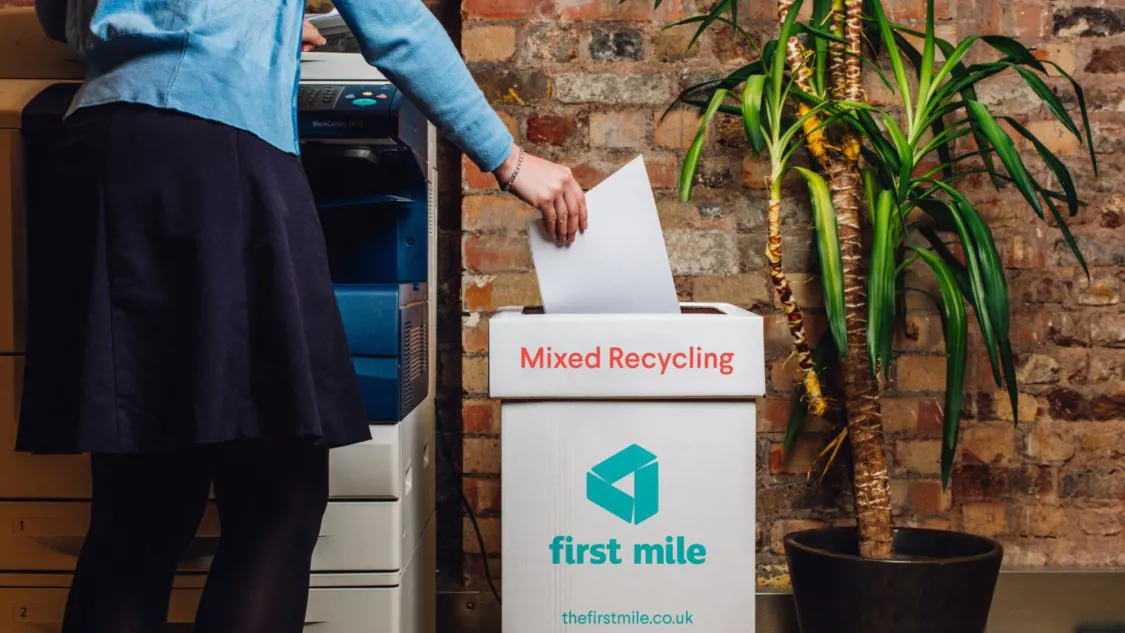
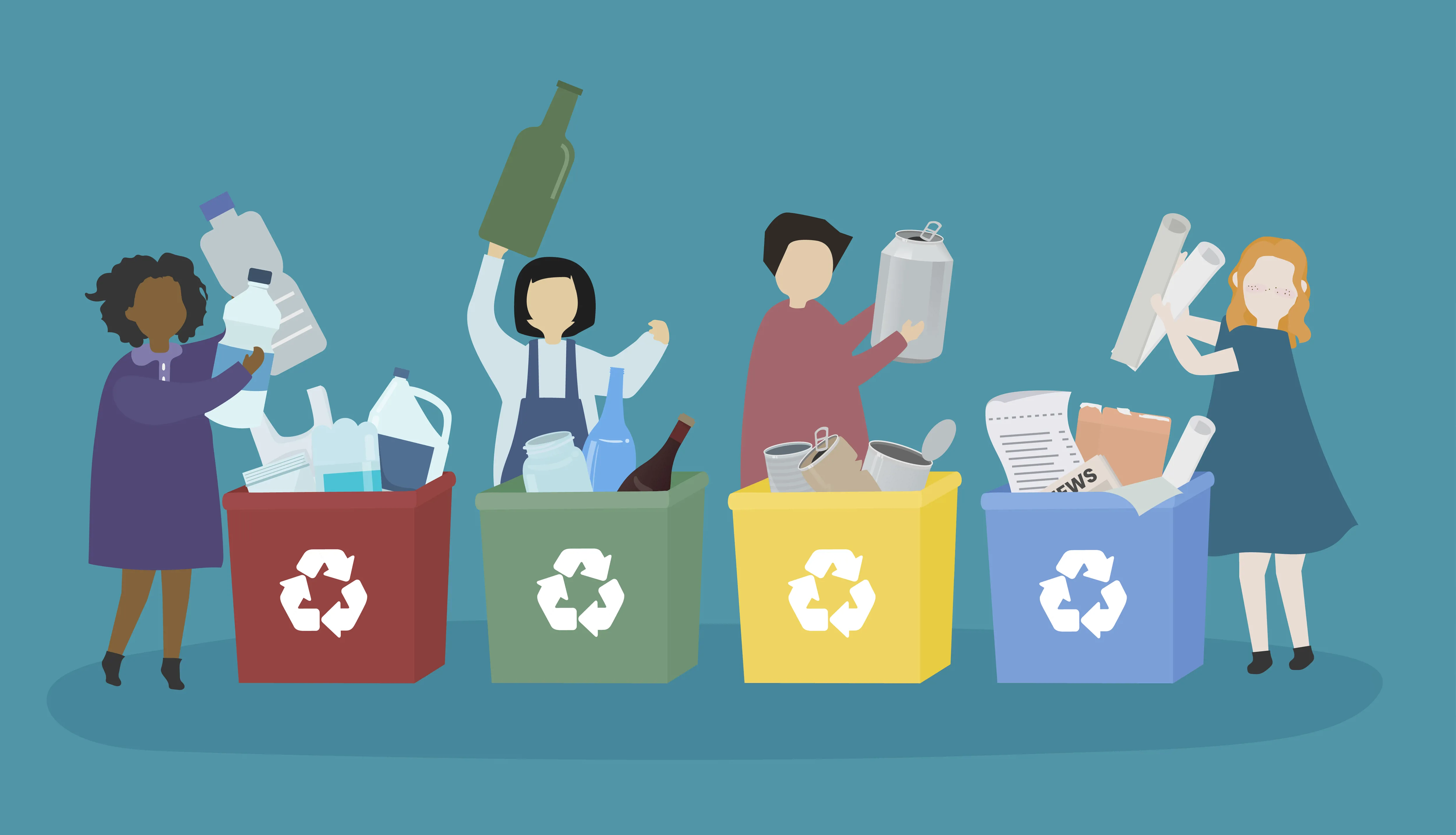
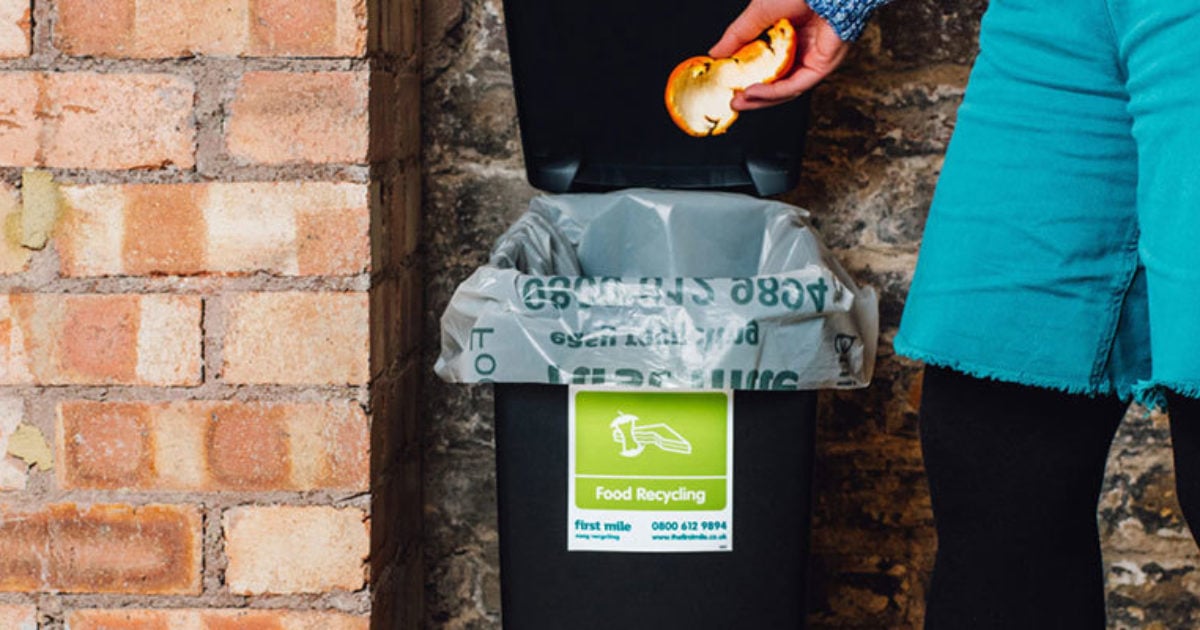
- Keep streams genuinely separate, so food waste, dry mixed recycling, glass and general waste each have their own clearly labelled bin.
- Give a quick rinse and a squash to containers, and take lids off where needed, so food residue does not ruin a load.
- Put clear recycling signage and posters right where people use the bins.
- Treat the tricky items properly. Flexible plastics like crisp packets and cling film need a specialist stream, and items like PVC and polystyrene cannot be recycled at all.
Five ways your business can recycle better this World Environment Day
You do not need to wait for a new strategy. Pick one of these and start this week.
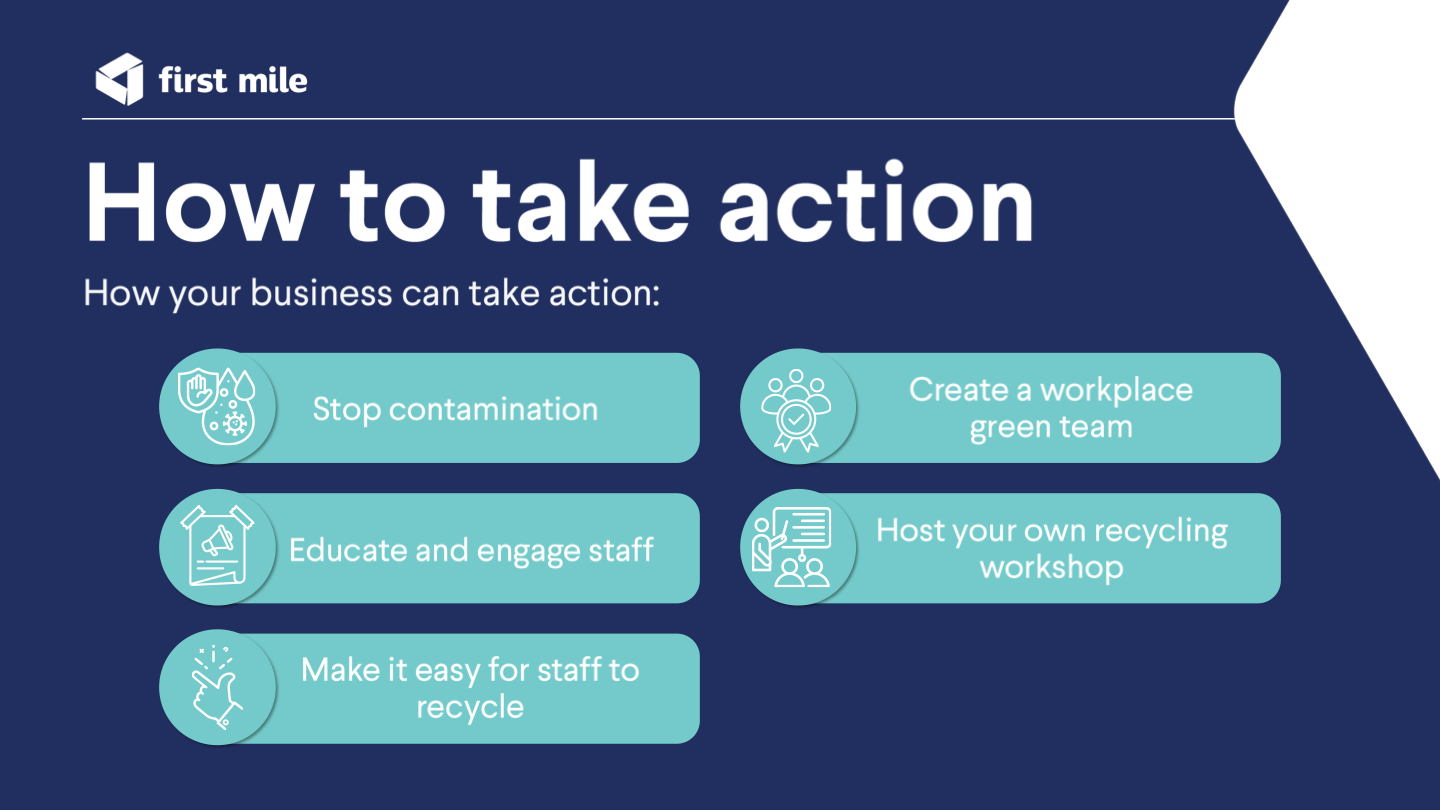
- Get the basics of contamination right. Audit your bins, fix the labelling, and make the correct choice the easy choice for staff.
- Add the streams you are missing. We offer single stream services for a wide range of common materials. If you have a high volume of coffee cups, flexible plastics or other items - set up a dedicated service rather than putting into general waste.
- Engage your team. Recycling is a habit, and habits need prompts. Posters, a short briefing or a "green team" can go a long way.
- Use the Simpler Recycling rules as a prompt. Mandatory waste stream separation is now in force for businesses, so this is the right time to get your setup in order for general waste, mixed recycling and food waste.
- Measure it. If you cannot see your recycling rate and carbon impact, you cannot improve them. First Mile customers track exactly this in the Recycling Data Studio on our customer portal, where recycling rates and carbon savings update in real time. We offer all our customers the insights they need to make improvements to their recycling practices.
Want to learn more? We covered all of this in more detail in our World Recycling Day webinar, from the carbon numbers to the do's and don'ts of business recycling.
You can watch the full recording here.
The takeaway
The climate news this World Environment Day is sobering, and it is fair to feel the problem is bigger than any one business. But how your organisation handles its waste is one of the clearest, most immediate ways it can cut carbon. Recycling stops emissions before they start, and the businesses that do it well see real, measured results.
Our mission is to help businesses to reduce their carbon impact by recycling more. Contact us today to find out how we can support you or book a free waste audit to get started. Good for the planet. Good for business.
External Sources Linked:
Climate Change Committee, A Well-Adapted UK: https://www.theccc.org.uk/publication/a-well-adapted-uk/
The Guardian, Heatwaves in Britain in 2052: https://www.theguardian.com/commentisfree/2026/may/26/heatwaves-britain-2052-sleep-hot-houses-water-climate
World Meteorological Organization, Prepare for the imminent return of El Niño: https://wmo.int/news/media-centre/wmo-prepare-el-nino
State of Carbon Dioxide Removal (3rd edition): https://www.stateofcdr.org/report/3rd-edition